aContents:IntroductionPosition of Hydrogen in Periodic tableIsotopes of HydrogenOrtho and Para HydrogenPreparation of HydrogenProperties of HydrogenUses of HydrogenHydridesWaterStructure of waterProperties of waterHard and Soft waterTemporary and Permanent Hardness of water and its removalHeavy waterHydrogen peroxideStructure of Hydrogen peroxideProperties of Hydrogen peroxideStrength of Hydrogen peroxide solutionUses of Hydrogen peroxideHydrogen as a Fuel9.1 IntroductionDihydrogen (H2), a flammable gaseous substance, is the simplest member (atomic symbol H) of the family of chemical elements as it contains one electron and one proton. Although hydrogen is the most abundant element in the universe, it makes up only about 0.14% of Earth’s crust by weight. It is invariably present in most of the compounds we come across in our daily life such as water, carbohydrate, proteins etc. As it has an unpaired electron, it is reactive and in its elemental state exists as a diatomic molecule (H2) by formation of a covalent bond between two H atoms. Hydrogen has great industrial importance and is considered as the major future source of energy as it can overcome the global concern related to energy.9.2 Position in Periodic TableHydrogen is the first element of the periodic table as its atomic number is 1. There are metals, non-metals and metalloids or semimetals in the periodic table. Metals are situated on the left-hand side of the periodic table and the metallic character decreases as we move towards the right. The elements on the extreme right are all non-metals. In between the metals and non-metals, there are metalloids. The only exception to this rule is Hydrogen. It has similarity in properties both with alkali metals (group 1) as well as halogens (group 17). Resemblance of Hydrogen with Alkali Metals The hydrogen has the electronic configuration of 1s1 which resembles with ns1 general valence shell configuration of alkali metals. It forms unipositive ion (H+) like alkali metals (Na+, K+, Cs+) after losing one electron. It forms halides (HX), oxides (H2O), peroxides (H2O2) and sulphides (H22S) like alkali metals (NaX, Na2O, Na2O2, Na2S). It acts as a reducing agent like alkali metals.However, unlike alkali metals which have ionization energy ranging from 377 - 520 kJ mol-1, the hydrogen has 1314 kJ mol-1 which is much higher than alkali metals. Since hydrogen atoms are very small in size, many properties of hydrogen are different from those of alkali metals. Therefore, hydrogen is never included in the discussion of alkali metal properties.Resemblance of Hydrogen with Halogens Like the formation of halides (X-) from halogens, hydrogen also has a tendency to gain one electron to form hydride ion (H-) whose electronic configuration is similar to the noble gas, helium (1s2). In terms of ionization enthalpy, hydrogen resembles more with halogens which have ionization energy ranging from 1008-1680 kJ mol-1.However, the electron affinity of hydrogen is much less than that of halogen atoms. Hence, the tendency of hydrogen to form hydride ion is low compared to that of halogens.Because of its distinct characteristics, it is noteworthy that it has its own place in the periodic table.9.3 Isotopes of HydrogenHydrogen has three naturally occurring isotopes; protium (1
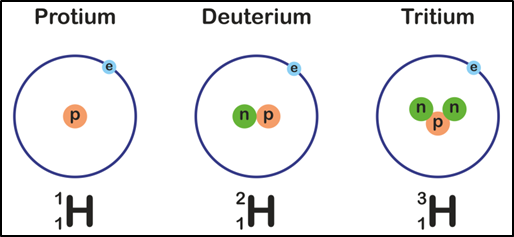
1
H or H), deuterium (1
1
H or D) and tritium (3
1
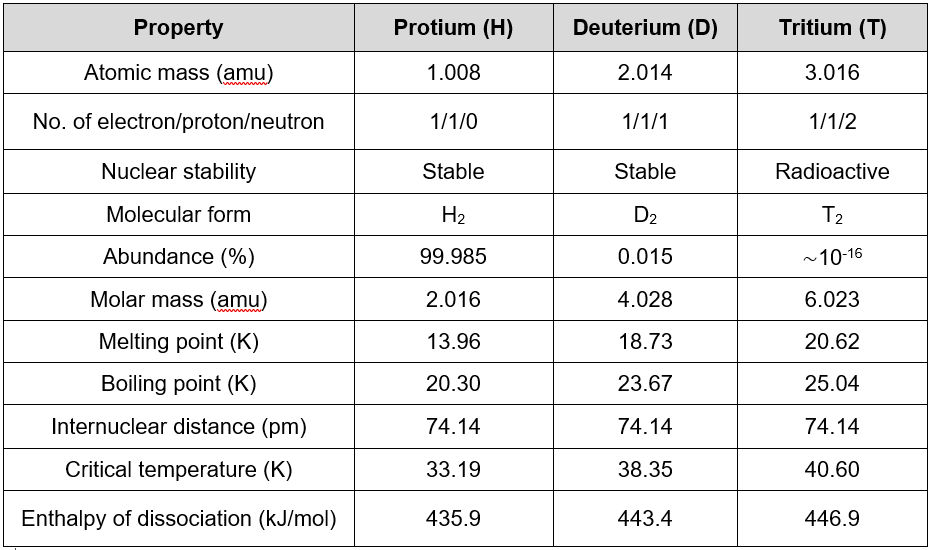
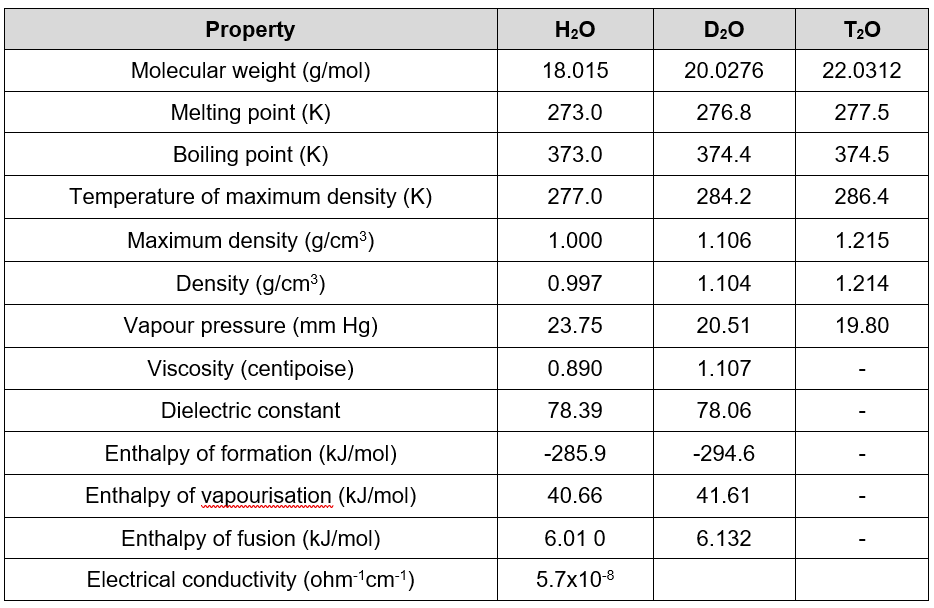
H or T). Protium is the predominant form (99.985%) and it is the only isotope that does not contain a neutron. Due to the existence of these isotopes naturally occurring hydrogen can exist as H2, HD, D2, HT, T2, and DT. Deuterium, also known as heavy hydrogen, constitutes about 0.015% of terrestrial hydrogen in the form of HD. The third isotope, tritium is a radioactive isotope of hydrogen which occurs only in traces (~1 atom per 1018 hydrogen atoms). The properties of these isotopes are shown in Table below.
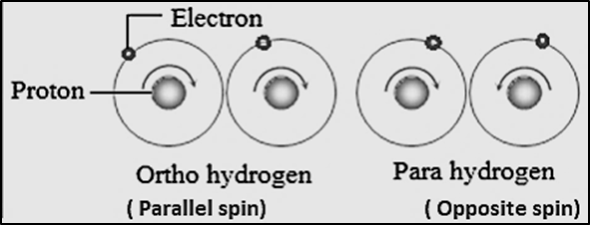
Since the isotopes have the same electronic configuration, they have almost the same chemical properties. The only difference observed is in their rates of reactions, mainly due to their different values of enthalpy of bond dissociation (See Table). However, in physical properties these isotopes differ considerably due to their large mass differences.9.4 Ortho and Para HydrogenWhen molecular hydrogen is formed, the spins of two hydrogen nuclei can be in the same direction or in the opposite direction as shown in the figure. These two forms of hydrogen molecules are called ortho and para hydrogens respectively. Ordinary dihydrogen is an equilibrium mixture of ortho and para hydrogen. The conversion between ortho-hydrogen and para-hydrogen is extremely slow as they have different nuclear spin states. Nuclear spins interact so weakly with other properties of matter that these spin states are conserved in almost any process, including chemical reactions. The two forms may, however, interconvert under certain conditions. One of these is by the introduction of catalysts (such as activated charcoal or various paramagnetic substances); another method is to apply an electrical discharge to the gas or to heat it to a high temperature. The equilibrium shifts in favour of para hydrogen when the temperature is lowered. At the room temperature, the ratio of ortho to para hydrogen is 3:1. Even at very high temperatures, the ratio of ortho to para hydrogen can never be more than 3:1.
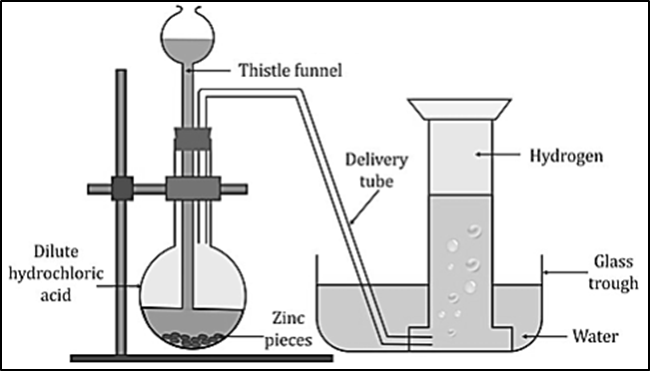
Ortho and para hydrogen are similar in chemical properties but slightly differ in some of the physical properties. For example, the melting point of para-H2 is 13.83 K while that of ortho-H2 13.95 K; boiling point of para hydrogen is 20.26 K while that of ortho-H2 20.39 K. Since the nuclear spins are in opposite directions the magnetic moment of para-H2 is zero and ortho hydrogen has magnetic moment twice that of a proton.9.5 Preparation of HydrogenIt can be divided in two broad categories; laboratory preparation and industrial production.Laboratory preparation(i) It is usually prepared by the reaction of granulated zinc with dilute hydrochloric acid. Granulated zinc is preferred over pure zinc since granulated zinc provides more surface area. It also contains a small amount of copper, which acts as a catalyst in the process. Dilute HCl is added to the flask containing granulated zinc through a thistle funnel. The acid and zinc react with each other, producing hydrogen. The hydrogen gas produced passes through a delivery tube and is collected by the downward displacement of water.Zn + 2HCl → ZnCl2 + H2 ↑
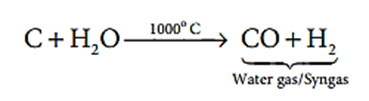
Precautions to be taken Before collecting the hydrogen gas with the help of the apparatus, precautions must be taken in order to ensure that all the air inside the apparatus has been displaced. This is because hydrogen gas reacts explosively with air.(ii) It can also be prepared by the reaction of zinc with aqueous alkali.Zn + 2NaOH → Na2ZnO2 + H2 ↑Industrial or Commercial production The different ways through which hydrogen is produced commercially is given below –(i) Electrolysis of acidified water using platinum electrodes gives hydrogen. Bubbles of hydrogen form at the cathode, and oxygen evolves at the anode. The net reaction is:2H2O (l) + electrical energy ⟶ 2H2 (g) + O2 (g)(ii) High purity (>99.95%) dihydrogen is obtained by electrolysing warm aqueous barium hydroxide solution between nickel electrodes.(iii) It is also obtained as a by-product in the manufacture of NaOH and chlorine by the electrolysis of brine (NaCl) solution. During electrolysis, the reactions that take place areAt anode, 2Cl- (aq) ⟶ Cl2 (g) + 2e-At cathode, 2H2O (l) + 2e- ⟶ H2 (g) + 2HO- (aq)The overall reaction by adding spectator ion Na+2Na+ (aq) + 2Cl- (aq) + 2H2O (l) ⟶ Cl2 (g) + H2 (g) + 2Na+ (aq) + 2HO- (aq)(iv) Water is the cheapest and most abundant source of hydrogen. Passing steam over coke (an impure form of elemental carbon) at 1000 °C produces a mixture of carbon monoxide and hydrogen known as water gas (CO+H2). This is also called ‘syngas’ (synthetic gas) as it is used in the synthesis of organic compounds such as methanol and simple hydrocarbons. The process of producing ’syngas’ from coal is called ’coal gasification’.
It is possible to produce additional hydrogen by mixing the water gas with steam in the presence of a catalyst (iron chromate) to convert the CO to CO2. This reaction is known water gas shift reaction. Carbon dioxide is removed by scrubbing with sodium arsenite (NaAsO2) solution.
(v) It is also possible to prepare a mixture of hydrogen and carbon monoxide by passing hydrocarbons (CnH2n+2) from natural gas or petroleum and steam over a nickel-based catalyst in the temperature range 800-900 °C and 35 atm pressures. Propane (C3H8) is an example of a hydrocarbon reactant.CnH2n+2 + nH2O ⟶ nCO + (2n+1)H2
Presently ~77% of the industrial H2 is produced from petro-chemicals, 18% from coal, 4% from electrolysis of aqueous solutions and 1% from other sources.9.6 Properties oh Hydrogen9.6.1 Physical PropertiesHydrogen is a colorless, odorless, tasteless, lightest gas. It is a combustible gas but not a supporter of combustion. It is a non-polar diatomic molecule and can be liquefied under low temperature and high pressure. The extremely low melting and boiling points result from the weak forces of attraction between the molecules. Various physical constants of hydrogen molecule are listed in Table (vide supra 9.3).9.6.2 Chemical PropertiesMolecular hydrogen can react with many elements and compounds, but at room temperature the reaction rates are usually so low as to be negligible. This apparent inertness is in part related to the very high dissociation energy of H-H bond which is the highest (436.0 KJ/mole) for a single bond between two atoms of any element. At elevated temperatures, however, the reaction rates are high. The molecule is inert at room temperature and atomic hydrogen can be produced (H2 ⟶ 2H) at a high temperature in an electric arc (2,800 - 19,000 °C) or under ultraviolet radiations. It undergoes reactions by loss of the only electron to give H+ gain of an electron to form H- sharing electrons to form a single covalent bondReaction with O2Hydrogen reacts with oxygen to produce water. This is an explosive reaction and releases lot of energy. This is used in fuel cells to generate electricity.2H2 + O2 → 2H2O ΔH = -285.9 kJ/molReaction with N2With dinitrogen it forms ammonia at 400-450 oC and 200 atm pressure with iron as catalyst. It is the method for the manufacture of ammonia by the Haber process.3H2 + N2 → 2NH3 ΔH = -92.6 kJ/molReaction with halogensDihydrogen reacts with halogens to give corresponding halides. Reaction with fluorine takes place even in dark with explosive violence while with chlorine at room temperature under light. It combines with bromine on heating and reaction with iodine is a photochemical reaction.H2 + X2 → 2HX (X = F, Cl, Br & I)Reaction with MetalsIt has a tendency to react with reactive metals such as lithium, sodium and calcium to give corresponding hydrides (vide infra 9.7) in which the oxidation state of hydrogen is -1.2Li + H2 → 2LiH 2Na + H2 → 2NaHThese hydrides are used as reducing agents in synthetic organic chemistry. It is used to prepare other important hydrides such as lithium aluminium hydride (LiAlH4) and sodium borohydride (NaBH4).4LiH + AlCl3 → LiAlH4 + 3LiCl 4NaH + B(OCH3)3 → NaBH4 + 3CH3ONaReaction with Metal ions and OxidesAt elevated temperatures and pressures hydrogen reduces the oxides of most metals (that are less active than iron) and many metallic salts (containing metal ions) to the metals.H2 (g) + PdCl2 (aq) → 2HCl + PdyH2 (g) + MxOy (s) → xM (s) + yH2O (l)H2(g) + CuO(s) → Cu(s) + H2O(l) H2(g) + FeO(s) → Fe(s) + H2O(l) (here x=1, y=1)Reduction reaction with Organic compoundsHydrogen itself acts as a reducing agent. Hydrogenation: It is an addition reaction where hydrogen molecules are used to saturate (reduce) unsaturated organic compounds (having carbon-carbon multiple bonds) usually in the presence of a catalyst such as nickel, palladium or platinum. Sometimes, hydrogenated products of commercial importance are also produced.HCΞCH + H2 → H2C=CH2 + H2 → CH3CH3Hydroformylation: It is an industrial process for the production of aldehydes from alkenes by the addition of synthesis gas (CO + H2) in the presence of a catalyst. Hydroformylation involves the net addition of a formyl group (CHO) and an H atom to C=C bond. H2C=CH2 + H2 + CO → CH3CH2CH=O These aldehydes can further undergo reduction to give alcohols.CH3CH2CH=O + H2 → CH3CH2CH2OH9.6.3 Uses of HydrogenAmmonia manufacture: The largest single use of hydrogen in the world is in ammonia manufacture, which consumes about two-thirds of the world’s hydrogen production. Ammonia is used for the manufacture of chemicals such as nitric acid, fertilizers and explosives.Methanol manufacture: It can be used to manufacture the industrial solvent, methanol from carbon monoxide using copper as catalyst.Reduction: Unsaturated vegetable and animal oils and fats are hydrogenated to saturated fats called Vanaspati (margarine). Hydrogen is used to reduce aldehydes, fatty acids, and esters to the corresponding alcohols. Aromatic compounds can be reduced to the corresponding saturated compounds (for example phenol to cyclohexanol). Nitro compounds can be reduced easily to amines.Metallurgy: In metallurgy, hydrogen can be used to reduce many metal oxides to metals at high temperatures.CuO + H2 → Cu + H2O WO3 + 3H2 → W + 3H2OCutting and welding: Atomic hydrogen and oxy-hydrogen torches are used for cutting and welding.Energy source: It has many advantages over the conventional fossil fuels and electric power. Hydrogen is a clean fuel that, when consumed in a fuel cell, produces only water, electricity, and heat. It releases greater energy per unit mass of fuel in comparison to gasoline and other fuels. The reversible uptake of hydrogen in metals is also attractive for rechargeable metal hydride battery.Rocket fuel: Hydrogen has been used as a primary rocket fuel for combustion with oxygen or fluorine and is favoured as a propellant for nuclear-powered rockets and space vehicles.9.7 HydridesHydrides are a class of chemical compounds in which hydrogen is combined with another element. There are three basic types of hydrides; ionic or saline, covalent, and metallic or non-stoichiometric based on the different types of chemical bond involved.9.7.1 Ionic or Saline hydridesThese hydrides are salt like, high melting, white crystalline solids having hydride ions (H-) and metal cations (Mn+). These metals are electropositive metal, generally, an alkali or alkaline-earth metal (except beryllium and magnesium) formed by transfer of electrons from metal to hydrogen atoms. The hydrides of lithium (LiH), beryllium (BeH2) and magnesium (MgH2) are more covalent in nature. In fact BeH2 and MgH2 are polymeric in structure. Other examples of binary saline hydrides include sodium hydride (NaH), and calcium hydride (CaH2), etc. In molten state, ionic hydrides conduct electricity and on electrolysis liberate H2 gas at anode, which confirms the existence of H- ion.2H- (melt) ⟶ H2 (g) + 2e-The H- ion in the saline hydrides is a strong base, and these hydrides react instantly and quantitatively with the hydrogen ion (H+) from water to produce hydrogen gas and the hydroxide ion in solution.H- + H2O → H2 + HO-Examples of complex saline hydrides include lithium aluminum hydride (LiAlH4), and sodium borohydride (NaBH4), both of which are commercial chemicals used as reducing agents.9.7.2 Covalent hydridesCovalent hydrides are primarily compounds of hydrogen and non-metals, in which the bonds are evidently electron pairs shared by atoms of comparable electronegativities. Since most of the covalent hydrides consist of discrete, small molecules that have relatively weak intermolecular forces, they are generally gases or volatile liquids. Exceptions are those cases where their properties are modified by hydrogen bonding. For example, although volatile; NH3, H2O, and HF are held together in the liquid state primarily by hydrogen bonding.On the basis of relative numbers of electrons in their Lewis structure, covalent hydrides are further divided into three categories; electron-deficient (B2H6) electron precise (CH4, C2H6, SiH4, GeH4) electron-rich hydrides (NH3, H2O)Electron-deficient: Mostly all elements of group 13 will form electron-deficient compounds as their octet is not complete. As a result, they behave as Lewis acids.Electron-precise: All elements of group 14 form compounds where octet is complete. Electron-rich: Elements of group 15-17 form such compounds where excess electrons are present as lone pairs. As a result, they behave as Lewis bases.9.7.3 Metallic or non-stoichiometric (or interstitial) hydridesMetallic hydrides are formed by heating hydrogen gas with the metals or their alloys. Earlier it was thought that in these hydrides, H occupies interstices in the metal lattice producing distortion without any change in its type leading to the term interstitial hydrides. However, recent studies have shown that except for hydrides of Ni, Pd, Ce and Ac, other hydrides of this class have lattice different from that of the parent metal. The hydrides show properties similar to parent metals and hence they are also known as metallic hydrides. They can conduct heat and electricity though not as efficiently as their parent metals do. One interesting and unique characteristic of these hydrides are that they can be nonstoichiometric where the fraction of H atoms to the metals are not fixed (for example, LaH2.87, TiH1.5-1.8, PdH0.6-0.8 etc.). As a result they are deficient in hydrogen. Some are relatively light, inexpensive and thermally unstable which make them useful for hydrogen storage applications. The property of absorption of hydrogen on transition metals is widely used in catalytic hydrogenation reactions. Some of the metals (e.g., Pd, Pt) can accommodate a very large volume of hydrogen and this property has high potential for hydrogen storage and as a source of energy.9.8 WaterIt is an essential natural source for the existence of life on the planet earth. Let it be animals or plants they require water to complete their daily metabolic activities. Water is one of the natural resources, which are found in an adequate amount. It is widely used for various purposes such as drinking, washing, bathing, cleaning, cooking, irrigation, and other industrial and domestic uses. A picture of earth taken from space will show it blue as major part of the earth is covered with water. About 71% of the Earth’s surface is water-covered, and the oceans hold about 96.5% of all Earth’s water. The three main sources of water are rainwater, groundwater (wells and springs), and surface water (reservoirs, rivers, streams, ponds, Lakes, etc.).9.8.1 Physical propertiesWater is a colourless, odourless and tasteless liquid. In the condensed forms (liquid and solid states), due to the presence of inter molecular hydrogen bonding between water molecules, results in unusual properties like high melting and boiling points. As compared to other liquids, water has a higher heat capacity, thermal conductivity, surface tension, dipole moment, etc. leading to its significance in the biosphere. Water is an excellent solvent for polar and some polar covalent compounds. Therefore, it helps in the transportation of ions and molecules required for metabolism. The high heat of vaporisation and heat capacity help in the moderation of the climate and body temperature of living beings. Some of the physical parameters of water along with heavy water (D2O) and super heavy water (T2O) are listed in Table (all data at 298 K).
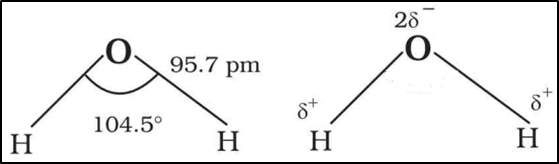
9.8.2 Structure of waterThere are two covalent bonds of oxygen with the hydrogen atoms. The rest of the four valence electrons of oxygen remain as two lone pairs of electrons. The lone pair-bond pair repulsion is more than bond pair-bond pair repulsion leading to a bond angle of 104.5° in the gas phase. There are partial negative and positive charges on the oxygen and hydrogen atoms, respectively as oxygen is more electronegative than hydrogen.
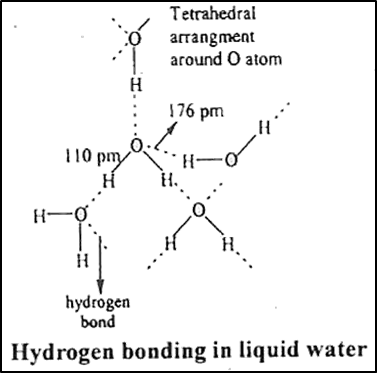
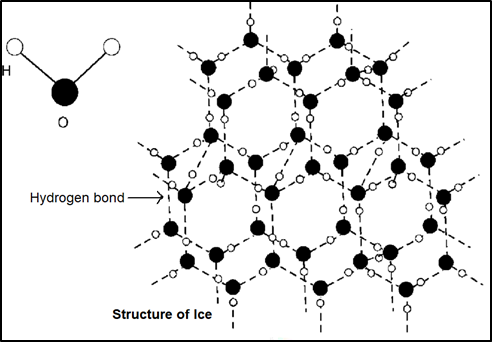
In the liquid phase water molecules are associated together by hydrogen bonds. Ice has a highly ordered three dimensional hydrogen bonded structure. At atmospheric pressure ice (solid form of water) crystallises in the hexagonal form, but at very low temperatures it condenses to cubic form. X-rays crystal structure shows that each oxygen atom is surrounded tetrahedrally by four other oxygen atoms at a distance of 276 pm. In ice, hydrogen bonding leads to an open type of structure with voids which can hold some other molecules of appropriate size interstitially. Due to these voids, ice is less dense than water, and so, ice cubes float on water. In winter season ice formed on the surface of a lake provides thermal insulation which ensures the survival of the aquatic life. This fact is of great ecological significance.
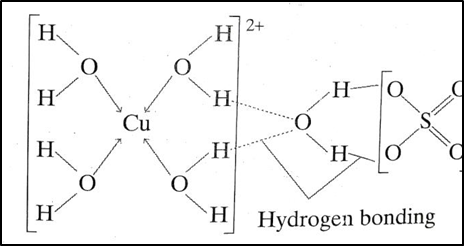
9.8.3 Chemical propertiesWater reacts with a large number of substances; metals, non-metals and compounds. Some of the significant reactions are given below.Reaction with metalsAlkali metals, being the most reactive metals, can decompose water even in cold with the evolution of hydrogen leaving an alkali solution.2Na + 2H2O → 2NaOH + H2The group 2 metals (except beryllium) react in a similar way but less violently. The hydroxides are less soluble than those of Group 1.Ba + 2H2O → Ba(OH)2 + H2Some transition metals react with hot water or steam to form the corresponding oxides. For example, steam passed over red hot iron results in the formation of iron oxide with the release of hydrogen.3Fe + 4H2O → Fe3O4 + H2Lead and copper decompose water only at a white heat. Silver, gold, mercury and platinum do not have any effect on water.Reaction with non-metalsIn the elemental form, the non-metals such as carbon, sulphur and phosphorus normally do not react with water. However, carbon will react with steam when it is red (or white) hot to give water gas (vide supra 9.5). On the other hand, the halogens react with water to give an acidic solution. For example, chlorine forms hydrochloric acid and hypochlorous acid (HOCl). It is responsible for the antibacterial action of chlorine water and used as bleach.Cl2 + H2O → HCl + HOClFluorine reacts differently to liberate oxygen from water.2F2 + 2H2O → 4HF + O2Amphoteric behaviourThe amphoteric nature of water implies that water can act as both an acid and a base. It means that water can be a proton donor as well as a proton acceptor. For example, in the reaction with HCl it accepts proton where as in the reaction with weak base ammonia, it donates proton.NH3 + H2O → NH4+ + HO- HCl + H2O → H3O+ + Cl-Auto-protolysis of water (Self-ionisation)During auto-protolysis, the ionisation of water takes place where water molecule, i.e. H2O deprotonates (removal of protons) in order to form a hydroxide ion HO-. The hydrogen nucleus H+ immediately protonates (accepts proton) another water molecule to form a hydronium ion, H3O+. H2O + H2O ⇌ H3O+ + HO- acid base conjugate acid conjugate baseHydrolysis reactionDue to high dielectric constant, it dissolves many ionic compounds. However, certain covalent and some ionic compounds are hydrolysed in water.SiCl4 + 2H2O → SiO2 + 4HCl P4O10 + 6H2O → 4H3PO4Hydrolysis of ionic nitrides (N3- ion) such as Ba3N2, Ca3N2, Li3N, etc. will yield ammonia and metal hydroxides.N3- + 3H2O → NH3 + 3HO-Hydrate formationA hydrate is any compound that has absorbed water molecules from its environment and included them in its structure. The majority of hydrates are inorganic hydrates, and they are the ones most often used and studied. The water molecules in inorganic hydrates are only loosely bonded to the compound, and there is no chemical reaction involved. The water molecule(s) can be removed from the compound fairly easily, such as through heating. An inorganic hydrate that has lost its water molecules is known as ‘anhydrous’. The water in the hydrated salts may form co-ordinate bond or just present in interstitial positions of crystals. The formulas are represented using the formula of the anhydrous (non-water) component of the complex followed by a dot then the water (H2O) preceded by a number corresponding to the number of moles of H2O per mole of the anhydrous component present. Some examples are [Cr(H2O)6]Cl3 – All six water molecules form co-ordinate bond BaCl2.2H2O – Both the water molecules are present in interstitial positions. CuSO4.5H2O – In this compound four water molecules form co-ordinate bonds while the fifth water molecule, present outside the co-ordination, can form intermolecular hydrogen bond with another molecule.
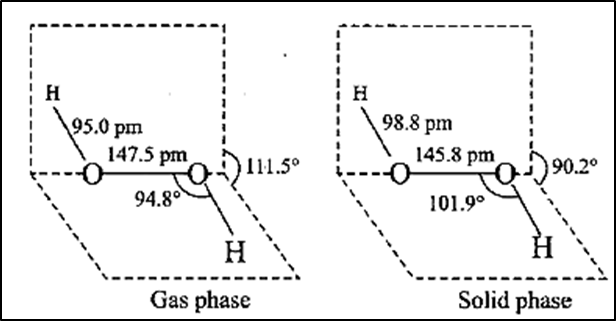
9.8.4 Hard and Soft WaterWater can be classified as ‘hard’ and ‘soft’ depending upon the amount of mineral ions. The hardness is generated because of the presence of bicarbonate, chloride and sulphate salts of magnesium and calcium (though Fe, Al, and Mg may also be found in certain areas). Water gets contaminated by these salts when it passes through the ground and rocks. Hard water does not produce lather with soap solution and forms scum/precipitate because the cations present in hard water react with soap (sodium salts of higher fatty acids like stearic acid, palmitic acid, oleic acid, etc.) to form a precipitate of calcium and magnesium salts of fatty acids. M2+ + 2C17H35COONa → (C17H35COO)2M ↓ + 2Na+ From hard water sodium stearate metal stearate M = Ca, MgIt is, therefore, unsuitable for washing purpose and is harmful for boilers as well, because of deposition of salts in the form of scale reducing the efficiency of the boiler.Water free from soluble salts of calcium and magnesium is called soft water. Soft water can produce lather with soap solution readily. Distilled water and rain water are common examples of soft water. The hardness of water is of two types; temporary hardness and permanent hardness.9.8.5 Temporary Hardness and its removalTemporary hardness is primarily due to the presence of soluble bicarbonates of magnesium and calcium ions. This can be removed by the following methods.(i) Boiling: Boiling the hard water followed by filtration of the insoluble salts produced. Ca(HCO3)2 → CaCO3 ↓ + H2O + CO2 Mg(HCO3)2 → MgCO3 ↓ + H2O + CO2The magnesium carbonate thus formed further hydrolysed to give insoluble magnesium hydroxide. It is because of high solubility product of Mg(OH)2 as compared to that of MgCO3, that Mg(OH)2 is precipitated.MgCO3 + H2O → Mg(OH)2 ↓ + CO2The resulting precipitates of CaCO3 and Mg(OH)2 can be removed by filtration.(ii) Clark’s method: Alternatively, Clark’s method can be used in which, calculated amount of lime (calcium hydroxide) is added to hard water containing the magnesium and calcium, and the resulting insoluble carbonates and hydroxides can be filtered off.Ca(HCO3)2 + Ca(OH)2 → 2CaCO3 ↓ + 2H2OMg(HCO3)2 + 2Ca(OH)2 → 2CaCO3 ↓ + Mg(OH)2 ↓ + 2H2O9.8.6 Permanent Hardness and its removalPermanent hardness of water is caused due to the presence of soluble salts of magnesium and calcium in the form of chlorides and sulphates in it. These are the salts that do not precipitate out as the temperature rises and cannot be extracted by simply boiling the water. It can be removed by the following methods.(i) Adding washing soda (sodium carbonate): Washing soda reacts with these metal (M = Ca or Mg) chlorides and sulphates in hard water to form insoluble carbonates.MCl2 + Na2CO3 → MCO3 ↓ + 2NaCl (M = Ca or Mg)MSO4 + Na2CO3 → MCO3 ↓ + Na2SO4(ii) Calgon’s process (addition of sodium polymetaphosphate): Sodium hexametaphosphate (Na6P6O18), (commercial term is calgon), when added to hard water, the following reactions take place.Na6P6O18 can be written as Na2[Na4(PO3)6].2M2+ + Na2[Na4(PO3)6] → Na2[M2(PO3)6] + 4Na+ (M = Ca or Mg)The complexes of calcium and magnesium so formed that is Na2[M2(PO3)6] remain dissolved in water and the water behaves as soft water. Here, calcium and magnesium ions are not free to react with soap as they have been tied up in the anionic part [M2(PO3)6]2- of the stable complexes.(iii) Ion exchange method (also called zeolite/permutit process): Ion exchange is a water treatment process that involves the exchange of ions present in the hard water for less damaging ions (Na+ ion) from the exchangers. The hard water is passed through an ion-exchange bed like zeolites. Zeolites are hydrated sodium alumino-silicates with a general formula, Na2O.Al2O3∙xSiO2∙yH2O (x = 2-10, y = 2-6). Zeolites have porous structure in which the monovalent Na+ ions are loosely held and can be exchanged with hardness producing metal ions (Ca2+ or Mg2+) in water. The complex structure can conveniently be represented as Na2Z with sodium as exchangeable cations.Na2Z + M2+ → MZ+ 2Na+ (M = Ca or Mg)When exhausted of Na+ ions, the materials can be regenerated by treating with aqueous sodium chloride. The metal ions (Ca2+ and Mg2+) caught in the zeolite are released and they get replenished with Na+ ions again.(iv) Organic ion exchangers or Synthetic resins method: The ion exchange resin technique can remove both cations and anions that cause hardness. These are complex organic molecules having giant hydrocarbon frame work with either acidic group (-SO3H or -COOH) or basic group (HO- or NH2-) attached to them. The resins with acidic group are capable of exchanging the H+ ions for the cations and are called cation exchange resin. The resins with basic groups are capable of exchanging their HO- or NH2- ions for other anions and are called anion exchange resin. First, the hard water is passed through a bed of cation exchange resin. The cations present in hard water are exchanged with H+ of resin asR-COOH + Ca2+ → (R-COO)2Ca + 2H+ R-COOH + Mg2+ → (R-COO)2Mg + 2H+The water which comes out of the bottom of first tank is richer in H+ ions. This water is then passed through a bed of anion exchange resin where anions contained in water are exchanged with HO- or NH2- ions asR-OH + Cl- → R-Cl + HO- R-OH + SO42- → R2SO4 + HO-Therefore, the H+ ions formed in the first tank combine with the HO- ions formed in the second tank to produce water. Thus, water obtained by this method is free from all types of cations as well as anions. It is known as deionised or demineralised water.Regeneration of resinsThe exhausted resin in the first tank is regenerated by treatment with moderately concentrated hydrochloric or sulphuric acid. Similarly, the exhausted resin in the second tank is regenerated by treatment with moderately concentrated solution of sodium hydroxide.Degree of Hardness of WaterThe amount of hardness causing substances (soluble salts of calcium or magnesium) in a certain volume of water measures the extent of hardness or degree of hardness. Hardness of water is always calculated in terms of calcium carbonate although this is never responsible for causing hardness of water because of its insoluble character. The reason for choosing CaCO3 as the standard for calculating hardness of water is the ease in calculation as its molecular weight is exactly 100. Thus Degree of hardness of water is defined as number of parts of mass of CaCO3 (Calcium carbonate), equivalent to various calcium and magnesium salts present in one million parts by mass of water. It is expressed in ppm (parts per million).It may be noted degree of hardness up to 100-150 ppm in water required for our daily needs such as cooking, bathing, washing of clothes, etc. is tolerable. But if degree of hardness exceeds this limit, then water is not suitable for domestic use.9.9 Heavy waterHeavy water (D2O) is the oxide of heavy hydrogen or deuterium, a heavier isotope of hydrogen which is denoted by 2H or D. Heavy water is also called deuterium oxide and is denoted by the chemical formula D2O. One part of heavy water is present in 6000 parts of ordinary water. It is mainly obtained by exhaustive electrolysis of water or as a by-product in some fertilizer industries. Heavy water is a colorless, odorless and tasteless liquid like water. Since the density of D2O is approximately 11% greater than that of H2O, an ice cube made of deuterium oxide will sink in normal water. It has a greater molar mass than regular water since the atomic mass of deuterium is greater than that of protium (H) which causes heavy water (D2O) to have slightly different chemical and physical properties when compared to H2O (vide supra 9.8.1 and 9.8.3).9.9.1 Chemical PropertiesHeavy water is chemically similar to ordinary water. The chemical reactions of heavy water are slower than those of ordinary water. Some of the important reactions of heavy water are mentioned below.Reaction with metals: Alkali metals and alkali earth metals reacts with heavy water to form heavy hydrogen (D2).2Na + 2D2O → 2NaOD (sodium deuteroxide) + D2Ca + 2D2O → Ca(OD)2 + D2 3Fe + 4D2O → Fe3O4 + 4D2Reaction with non-metalsCl2 + D2O → DCl + DOClReaction with metal oxide: D22O reacts slowly with metal oxides to form corresponding deutroxides.Na2O + D2O → 2NaODMgO + D2O → Mg(OD)2 CaO + D2O → Ca(OD)2Reaction with non-metalllic oxide: Non-metallic oxides react with D2O to form corresponding deutero acid.N2O5 + D2O → 2DNO3 P2O5 + 3D2O → 2D3PO4SO3 + D2O → D2SO4 (deutero sulphuric acid)Reactions with carbides and nitridesAl4C3 + 12D2O → 4Al(OD)3 + 3CD4 CaC2 + 2D2O → Ca(OD)2 + C2D2Mg3N2 + 6D2O → 3Mg(OD)2 + 2ND3 Ca3P2 + 6D2O → 3Ca(OD)2 + 2PD3Exchange reaction: When compounds containing hydrogen are treated with D2O, hydrogen undergoes an exchange for deuterium2NaOH + D2O → 2NaOD + HOD HCl + D2O → DCl + HODNH4Cl + 4D2O → ND4Cl + 4HODThese exchange reactions are useful in determining the number of ionic hydrogens present in a given compound. For example, when D2O is treated with of hypo-phosphorus acid only one hydrogen atom is exchanged with deuterium. It indicates that, it is a monobasic acid.H3PO2 + D2O → H2DPO2 + HDOSome of the above reactions can also be considered as preparation of some deuterium compounds.9.9.2 Uses of heavy water It is commonly used as a tracer to study organic reaction mechanisms and mechanism of metabolic reactions. Heavy water is used for the preparation of deuterium. Heavy water is widely used as moderator in nuclear reactors as it can lower the energies of fast neutrons. It is also used as a coolant in nuclear reactors as it absorbs the heat generated.9.10 Hydrogen peroxideLike H2O, hydrogen peroxide (H2O2) is another hydride of oxygen containing O-O single bond. Peroxide is a pale blue, clear liquid, slightly more viscous than water in its pure form. Unlike water it is thermodynamically unstable, and therefore decomposes to form water and oxygen.9.10.1 StructureAs established by X-ray studies, hydrogen peroxide molecule has a non-planar open-book type of structure. There are two planes in this structure, and each plane has one O-H bond. The O-O Linkage is called peroxide linkage. Both in gas-phase and liquid-phase, the molecule adopts a skew conformation due to repulsive interaction of the O-H bonds with lone-pairs of electrons on each oxygen atom. In the crystal, the dihedral angle (angle between two intersecting planes or half-planes) reduces from 111.5° to 90.2° on account of hydrogen bonding. The O-H, O-O bond length and dihedral angle in gas phase and solid are shown below.
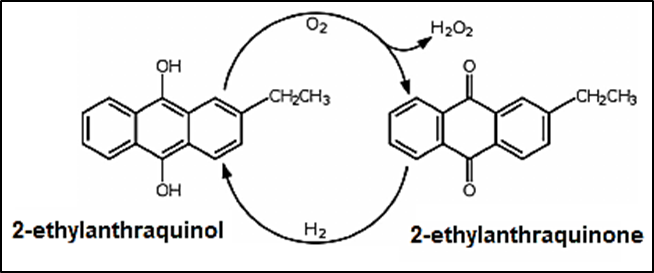
9.10.2 Preparation The various methods of preparation for hydrogen peroxide are mentioned below.Laboratory Methods of PreparationFrom sodium peroxide (Merck’s Process)In this technique, calculated amount of sodium peroxide (Na2O2) is gradually added to an ice-cold solution of 20% H2SO4 covered by ice and regularly stirred. Na2O2 + H2SO4 → H2O2 + Na2SO4Crystals of Na2SO4.10H2O separate out as the solution is cooled further and the resulting solution contains about 30% H2O2. Na2SO4.10H2O can be filtered out. From barium peroxide (i) A paste of hydrated barium peroxide (BaO2.8H2O) is prepared in ice-cold water and then added slowly to an ice-cold solution of 20% H2SO4.BaO2.8H2O (s) + H2SO4 (aq) → BaSO4 (s) ↓ + H2O2 (aq) + 8H2O (l)The precipitate of BaSO4 is removed by filtration leaving behind a dilute solution (5%) of H2O2.Limitation: H2O2 prepared by this method contains appreciable quantities of Ba2+ ions (in the form of dissolved barium persulphate) which catalyse the decomposition of H2O2. Therefore, H2O2 prepared by this method cannot be stored for a long time.(ii) When a rapid stream of CO2 is bubbled through a thin paste of BaO2 in ice-cold water, H2O2 and BaCO3 are produced.BaO2 + H2O + CO2 → BaCO3 ↓ + H2O2The insoluble barium carbonate is removed by filtration leaving behind a dilute solution of H2O2.(iii) Hydrogen peroxide can also be prepared by the action of phosphoric acid on barium peroxide.BaO2 + 2H3PO4 → Ba3(PO4)2 ↓ + 3H2O2Advantage: This method has the advantage over BaO2-H2SO4 method since almost all the heavy metal impurities present in BaO2 and which catalyse the decomposition of H2O2 are removed as insoluble phosphates. As a result, the H2O2 solution produced has excellent storage qualities.Industrial Method of PreparationBy electrolysis of 50% H2SO4Hydrogen peroxide is manufactured by the electrolysis of cold 50% solutions of H2SO4 in an electrolytic cell using platinum as anode and graphite as cathode. H2SO4 → H+ + HSO4-At Cathode: 2H+ + 2e → H2 At Anode: 2HSO4- → H2S2O8 + 2ePeroxydisulphuric acid (H2S2O8) formed at anode is withdrawn and then distilled with water under reduced pressure. The low boiling H2O2 distils over along with water leaving behind high boiling H2SO4 which is recovered and recycled.H2S2O8 + 2H2O → H2O2 + 2H2SO4This method is now used for the laboratory preparation of D2O2.K2S2O8 + 2D2O → 2KDSO4 + D2O2By autoxidation of 2-ethylanthraquinolIn this process, air is bubbled through a 10% solution of 2-ethylanthraquinol in benzene and cyclohexane when 2-ethylanthraquinol is oxidized to 2-ethylanthraquinone and H2O2 is formed according to the following reaction.
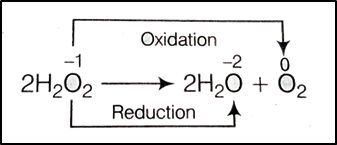
The H2O2 thus formed (about 1%) is extracted with water and the aqueous solution is concentrated by distillation under reduced pressure to give 30% (by weight) H2O2 solution. 2-Ethylanthraquinone so produced can be reduced back to the starting material i.e., 2-ethylanthraquinol by hydrogen and palladium catalyst.9.10.3 Storage of Hydrogen PeroxideHydrogen peroxide can decompose slowly into water and oxygen when exposed to light and is catalysed by metal surface, traces of metal impurities, traces of alkali (present in glass containers).2H2O2 → 2H2O + O2Because of this property, concentrated solution of H2O2 can be dangerous as uncontrolled rapid decomposition can lead to an explosion. Thus, it is stored in wax lined glass plastic container in dark. A small amount of stabilizer like phosphoric acid, urea, glycerol, sodium citrate must be added to retard its decomposition.Physical propertiesIn the pure state, hydrogen peroxide is an almost colourless (very pale blue), syrupy liquid. It has odour like that of nitric acid. Its aqueous solution has a bitter taste. It is soluble in water, alcohol and ether in all proportions. The high density (1.44 g/cm3) is due to association of its molecules by intermolecular hydrogen bonds. Its boiling point and melting points are 423 K and 272 K respectively. Since it decomposes vigorously on heating, it is not possible to determine its boiling point at atmospheric pressure. Its boiling point has been determined to be 423.2 by extrapolation method. The dipole moment of hydrogen peroxide is little more than that of water.9.10.5 Strength of hydrogen peroxide solutionThe strength of an aqueous solution of hydrogen peroxide is usually expressed in following ways:1) Percentage strength: It expresses the amount of hydrogen peroxide by weight present in 100 ml of the solution. For example, 30% aqueous solution of hydrogen peroxide implies that 30 grams of hydrogen peroxide are present in 100 mL of the solution.2) Volume strength: The most common method of expressing the concentration of H2O2 solution is, in terms of the volume of oxygen which a solution of H2O2 produces on decomposition at NTP. A solution of hydrogen peroxide labelled as ‘10 volume’ means that 1 ml of such a solution of hydrogen peroxide on decomposition produces 10 ml of oxygen at NTP. The aqueous solutions of hydrogen peroxide sold in the market are labelled as 10 volume, 20 volume, 30 volume, etc.A 30% solution of hydrogen peroxide is marketed as ‘100-volume’ H2O2. It means that at NTP, 100 ml of oxygen is liberated on decomposition of 1 ml of this solution. Commercially marketed sample is 10 V, which means that the sample contains 3% H2O2.Calculation of Strength of hydrogen peroxide solutionConversion of volume strength (10 volume) to percentage strength‘10 volume’ H2O2. means that at NTP, 100 ml of oxygen is liberated on decomposition of 1 ml of this solution.2H2O2 → 2H2O + O2 (Molar mass of H2O2 = 34 g/mol)At NTP, volume of 1 mole of an ideal gas = 22400 ml22400 ml of O2 (1 mole of O2) is obtained from 68g of H2O2 (2 moles of H2O2 ) 10 ml of O2 is obtained from {(68/22400)x10} = 0.03 g of H2O2 1 ml of H2O2 solution contains 0.03 g of H2O2100 ml of H2O2 solution contains 3.0 g of H2O2So, percentage strength is 3%.Conversion of percentage strength (3%) to volume strength3% aqueous solution of H2O2 means that 3 grams of H2O2 are present in 100mL of the solution.Number of moles of H2O2 in 3 g = 3/34 = 0.088 (molar mass of H2O2 = 34 g/mole).2 moles of H2O2 produces 1 mole of O20.088 moles of H2O2 produces 0.044 moles of O2At NTP, 0.044 moles of O2 = (22400x0.044) ml or 985.6 ml of O2100 ml of H2O2 solution contains 985.6 ml of O21 ml of H2O2 solution contains 9.856 ml or ≈10 ml of O2So, volume strength is ’10 volume’.The relation between percentage strength and volume strength of H2O2 is given by 56 times of % strength is equal to 17 times of volume strength, which is mathematically represented by; % strength = (17/56) x volume strength.9.10.6 Chemical properties(a) DecompositionIt is an unstable liquid readily decomposes on heating or on long standing to give water and dioxygen. It is an example of disproportionation decomposition as oxygen in H2O2 is reduced and oxidized simultaneously.
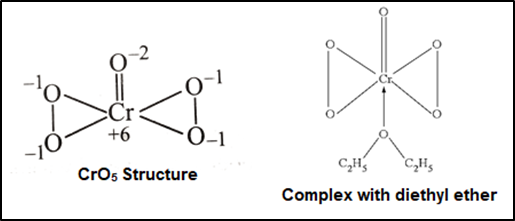
(b) Acidic behaviourPure hydrogen peroxide turns blue litmus red but its dilute solution is neutral to litmus. It thus behaves as a weak acid. Its dissociation constant is 2.24 × 10⁻¹² at 298 K which is only slightly higher than that of water. So, it is slightly stronger acid than water. Since hydrogen peroxide has two ionizable hydrogen atoms, it can form two series of salts i.e. hydroperoxides and peroxides.H2O2 ⇌ 2H+ + HO2‾ H2O2 ⇌ 2H+ + O22‾Its acidic character can be shown by its ability to neutralize bases such as NaOH, etc., to form corresponding hydroperoxides and peroxides.NaOH + H2O2 → NaHO2 + H2O 2NaOH + H2O2 → Na2O2 + 2H2OH2O2 does not decompose bicarbonates (HCO32-) and carbonates (CO32-) salts to evolve carbon dioxide gas as it is a weaker acid than carbonic acid (H2CO3).(c) Bleaching ActionThe bleaching action of hydrogen peroxide is due to the nascent oxygen which it liberates on decomposition. The nascent oxygen oxidises colouring matter. It is used for the bleaching of delicate materials like cotton, silk, wool etc.H2O2 → H2O + [O] (Nascent oxygen) Coloured substance + [O] → colourless(d) As oxidising and (e) As reducing agentHydrogen peroxide can act as oxidant as well as a reductant in both acid and alkaline solutions. The oxidation state of oxygen in hydrogen peroxide is −1. It can be oxidized to O2 (oxidation state = 0) or reduced to H2O or HO- (oxidation state of O = -2). It is considerably stronger as an oxidizing agent than as a reducing agent, especially in acidic solutions.(d) As oxidizing agentHydrogen peroxide acts as an oxidising agent both in acidic (reduced to H2O) as well as alkaline medium (reduced to HO-).In acidic medium In basic mediumH2O2 (aq) + 2H+ + 2e- → 2H2O (l) H2O2 (aq) + 2e‾ → 2HO‾ (aq)Oxidising action of H2O2 on different compounds is shown below in acidic, basic and neutral medium.(i) It oxidises iodide (I-) to iodine (I2). 2KI + H2O2 → I2 + 2KOH(ii) It oxidises sulphites (SO32-), nitrites (NO2-) and arsenites (AsO33-) to sulphates (SO42-), nitrates (NO3-) and arsenates (AsO43-).Na2SO3 + H2O2 → Na2SO4 + H2O NaNO2 + H2O2 → NaNO3 + H2ONa3AsO3 + H2O2 → Na3AsO4 + H2O(iii) It oxidises manganese salts to manganese dioxide.MnSO4 + 2NaOH + H2O2 → Na2SO4 + MnO4 + 2H2O(iv) It oxidises potassium ferrocyanide to potassium ferricyanide.2K4Fe(CN)6 + H2SO4 + H2O2 → 2K3Fe(CN)6 + K2SO4 + 2H2O(vi) It oxidises lead sulphide (PbS) to lead sulphate (PbSO4).PbS + 4H2O2 → PbSO4 + 4H2O(e) As reducing agent Hydrogen peroxide acts as a reducing agent both in acidic (reduced to H2O) as well as alkaline medium (reduced to HO-).In acidic medium In basic medium H2O2 → 2H+ + O2 + 2e- H2O2 + 2HO‾ → 2H2O + O2 + 2e‾Reducing action of H2O2 on different compounds is shown below in acidic as well as neutral medium.(i) It reduces acidified potassium permanganate to manganese sulfate.2KMnO4 + 3H2SO4 + 5H2O2 → 2MnSO4 + K2SO4 + 8H2O + 5O2In basic medium, potassium permanganate is reduced to manganese dioxide2KMnO4 + 3H2O2 → MnO2 + 2KOH + 3O2 + 2H2O(ii) It reduces potassium dichromate to chromium trioxide (Cr2O3) but in acidic medium to chromium sulphate.H2O2 + K2Cr2O7 → Cr2O3 + 2O2 + 2KOHK2Cr2O7 + 3H2O2 + 4H2SO4 → 2Cr2(SO4)3 + 3O2 + 7H2O(iii) It reduces chlorine to chloride (Cl-).Cl2 + H2O2 → 2HCl + O2(iv) It reduces hypohalites (OX-) to halides (X-). (X = halogen)NaOBr + H2O2 → NaBr + H2O + O2 CaOCl2 + H2O2 → CaCl2 + H2O + O2(v) It reduces potassium ferricyanide to potassium ferrocyanide2K3[Fe(CN)6] + 2KOH + H2O2 → 2K4[Fe(CN)6] + 2H2O + O2(vi) It reduces ferric salts to ferrous saltsFe2(SO4)3 + H2O2 + NaOH → 2FeSO4 + Na2SO4 + O2 + 2H2O(f) Formation of CrO5 complex If an acidic solution of a dichromate is treated with H2O2 in the presence of ether/amyl alcohol, a deep-blue solution of chromium pentoxide (CrO5) or chromic peroxide is obtained in ethereal layer. CrO5 is stable in ether or amyl alcohol. Here, oxidation state of Cr in both K2Cr2O7 and CrO5 is +6.
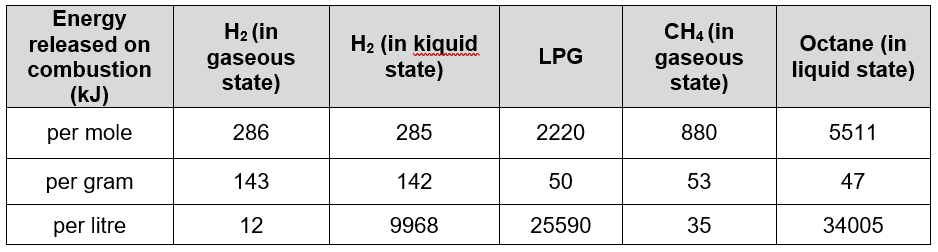
K2Cr2O7 + H2SO4 + 4H2O2 → 2CrO5 + K2SO4 + 5H2O9.10.7 UsesThe oxidizing ability of hydrogen peroxide and the harmless nature of the products when it reacts with other substances, i.e., water and oxygen, lead to its many applications. The industrial use of hydrogen peroxide is as a bleaching agent for delicate materials like silk, wool, paper pulp, straw, oils and fats. In daily life it is used as hair bleach and as a mild disinfectant. As an antiseptic it is sold in the market as perhydrol (30% H2O2 solution). It is used in the synthesis of hydroquinone, tartaric acid, certain food products and pharmaceuticals (cephalosporin) etc. It is used in water treatment to oxidize pollutants, as a mild antiseptic, and as bleach in textile, paper and hair-care industry. It is used for restoring the colour of lead painting which has blackened due to action of H2S present in the air on lead paints. Hydrogen peroxide oxidises black coloured lead sulphide to white coloured lead sulphate, there by restoring the colour.PbS + 4H2O2 → PbSO4 + 4H2O 93% hydrogen peroxide solution is used as an oxidant for rocket fuel and as a propellant. H2O2 oxidizes hydrazine to nitrogen gas and water with generation of lots of heat. The heat turns the water into steam, which the engine can eject at a very high speed through a rocket nozzle.NH2NH2 + 2H2O2 → N2 + 4H2O +heat. It is used in laboratory for detecting the presence of chromium, titanium and vanadium salts with which it yields peroxides of characteristic colours.9.11 Hydrogen as a fuel (source of energy)Dihydrogen liberate large quantities of heat on combustion. The energy released by combustion of fuels like dihydrogen, methane (CH4), LPG as compared in terms of the same amount in mole, mass and volume are shown in table below.
Advantages of H2 as a fuel From this table it is clear that on a mass for mass basis H2 can release more energy (three times) than petrol (octane). It is abundantly available in the combined state as water. Use of H2 as fuel provides pollution free atmosphere because its combustion product is only water. The only pollutants will be the oxides of dinitrogen (due to the presence of N2 as impurity with H2).Disadvantages of using H2 as a fuel Dihydrogen does not found in free state in nature. Hydrogen gas has explosive flammability which causes problem to its storage and transportation. A cylinder of compressed H2 weighs about 30 times as much as a tank of petrol containing the same amount of energy. H2 gas is converted into liquid state by cooling to 20K which requires expensive insulated tanks. These disadvantages have prompted researchers to search for alternative techniques to use dihydrogen in an efficient way. One of the alternatives is hydrogen economy.Hydrogen EconomyHydrogen economy is an economy that relies on hydrogen as the commercial fuel that would deliver a substantial fraction of a nation’s energy and services that is to burn hydrogen as a fuel in industry and power plants and possibly also at homes and motor. The basic principle of hydrogen economy is storage and transportation of energy in the form of dihydrogen instead of fossil fuels or electric power.There are two major barriers in achieving the goal of hydrogen economy; to find out a cheap method for large scale production of dihydrogen and to find out an effective means of storing dihydrogen. It can be expected that economically viable and safe sources of dihydrogen will be found in the coming years for its usage as a common source of energy.
Subscribe
Would you like to receive our Newsletter, NEET- IIT Videos, STEM Materials, NEET-IIT Solved previous year question papers.
Book Your Demo Class
Try for 1 Month @
Rs 2,000 only few seats available. Offer Ends Soon.
Book now and get your free unlimited TeenEinstein Portal Access.
You are now subscribed to our Newsletter etc.
Would you like to continue Free Trial.
TeenEinstein Stem Platform Portal access for 30 days Would you like to get the Portal access free trial for 30 days .
TakeBreak
You have watched Screen for 30 minutes, please relax your eyes by watching any other object at 20 feet for 20 secs.