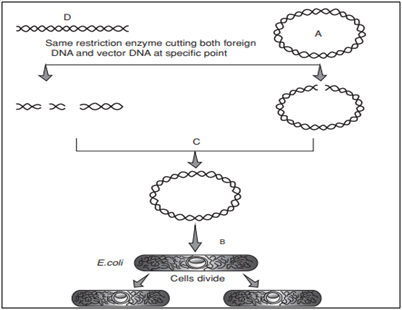
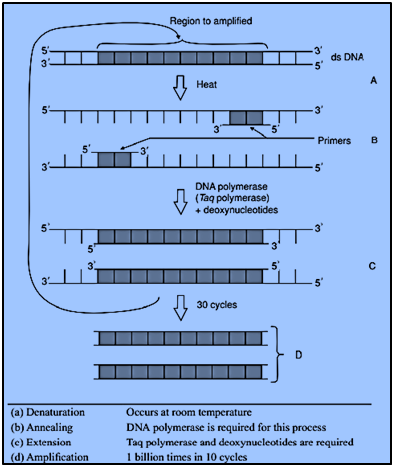
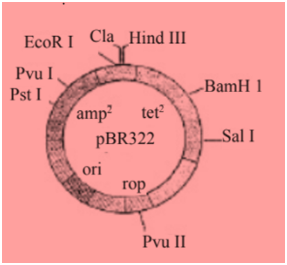
a1. Through …………………transfer of any gene into a completely different organism can be done.(1) Genetic engineering (2) Tissue culture(3) Transformation (4) RNA interference2. In………………..DNA probe is used:-(1) Gel electrophoresis (2) Northern blotting(3) DNA finger printiing (4) Interferon synthesis3. The artificial gene first synthesized by Khorana was a ……………..gene.(1) Arginine (2) Lysine(3) Alanine t-RNA of yeast (4) Valine t-RNA4. An artificial gene vector pBR 322does not have……………….(1) Amphiciline marker gene (2) Cos site(3) Restriction site for cla I enzyme (4) Ori5. Taq & Pflu, the thermostable enzymesisolated from thermophilic bacteria are :-(1) RNA polymerase (2) DNA primers(3) DNA polymerases (4) DNA ligase6. How Bt toxin kills the insect?(1) Blocking the nerve conduction(2) Damaging the surface of trachea(3) By creating pores in the tracheal system (4) By creating pores in the mid gut7. Select the one which is not an application of modern biotechnology?(1) Production of humulin (2) Developing a DNA vaccine (3) Gene therapy (4) Production of cheese and butter8. For the synthesis of…….. transgenic Brassica napus has been used.(1) Hirudin (2) Heparin (3) Polgalacturonase (4) Cry protein9. Transgenic tobacco plant was resistant against the infection of ………(1) Algae Scenedesmus (2) Fungi Fusarium(3) Bacteria : Bacillus thurigenesis (4) Nematode : Melodigyne incognita10. Gene therapy was first clinically given for treating ……….(1) Rheumatoid arthritis (2) Adenosine deaminase deficiency(3) Diabetes (4) Chicken pox11. In Genetic engineering Agrobacterium tumifaciens is used for :-(1) DNA-mapping (2) DNA-modification(3) Gene transfer (4) DNA finger printing12. In 1979 Khorana had synthesized gene coding for tyrosine t-RNA of E.coil That is Biologically functional by:-(1) 333 nucleotide pairs (2) 312 nucleotide pairs(3) 77 nucleotide pairs (4) 207 nucleotide pairs13. The first restriction endonucleases isolated by(1) Temin & Baltimore (2) Sanger(3) Smith (4) Paul berg14. Genetic engineering is :-(1) Study of extra nuclear gene(2) Manipulation of genes by artificial method(3) Manipulation of RNA(4) Manipulation of enzymes15. PCR technique is used for :-(1) DNA identification (2) DNA repair(3) DNA amplification (4) Cleave DNA16. Select the structure involved in genetic engineering:-(1) Plastid (2) Plasmid(3) Codon (4) None17. mention the example of chemical scissors –(1) ECo - RI (2) Hind – III(3) Bam - I (4) All the above18. Role of Restriction endonucleases used in genetic engineering:-(1) They can degrade harmful proteins(2) They can join DNA fragments(3) They can cut DNA at variable site(4) They can cut DNA at specific base sequences19. By the addition of foreign gene, the genotype of an organism is improved.That process is called(1) Tissue culture (2) Genetic diversity(3) Genetic engineering (4) Plastic surgery20. A genetically manipulated organism which is having genome with one or more inserted gene of another species is called :-(1) Transposon(2) Gene expression(3) Transgenic organism(4) Retroposons21. Recombinant bacteria gives……….. in presence of chromogenic substrate (1) Red coloured colonies (2) Colourless colonies(3) Blue colonies (4) Green colonies22. ………………of the following enzyme is known as molecular scissors(1) Ligase(2) DNA polymerase(3) Restriction enzyme(4) Helicase23. ………………. is not required in PCR –(1) DNA primer (2) DNA template(3) RNA primer (4) Taq polymerase24. For restriction enzyme, the substrate is –(1) Single stranded RNA(2) Proteins(3) Double stranded DNA(4) Single stranded DNA25. What is a vector in recombinant DNA technology,?(1) the enzyme that cuts DNA into restriction fragments(2) the sticky end of a DNA fragment(3) a plasmid used to transfer DNA into a living cell(4) a DNA probe used to identify a particular gene26. For cloning gene, pBR-322 which is frequently used as a vector is–(1) an original bacterial plasmid(2) a modified bacterial plasmid(3) a viral genome(4) a transposon27. Which are the two microbes found to be very useful in genetic engineering?(1) Escherichia coli and Agrobacterium tumefaciens(2) Vibrio cholerae and a tailed bacteriophage(3) Diplococcus sp. and Pseudomonas sp.(4) Crown gall bacterium and Caenorhabditis elegans28.Role of Restriction endonuclease –(1) Cuts the DNA molecule randomly(2) Cuts the DNA molecule at specific sites(3) Restricts the synthesis of DNA inside the nucleus(4) Synthesizes DNA29. Genetic engineering aims at :-(1) Destroying wild gene(2) Preserving defective gene(3) Curing human disease by introducing new gene(4) All the above30. To find out a gene, a piece of nucleic acid is using by forming hybrid with it, is called as :-(1) c – DNA (2) DNA probe(3) Sticky end (4) Blunt end31. For amplification of DNA Taq - polymerase is used. It isrelated with (1) Hybridoma technique(2) PCR-technique(3) Gene cloning(4) r-DNA technology32. Select thetrue statement for plasmid (1) Plasmids are widely used in gene transfer(2) These are found in virus(3) Plasmid contains gene for vital activities(4) These are main part of chromosome33. ……………. cuts the DNA from specific places :–(1) Restriction endonuclease(2) Ligase(3) Exonuclease(4) Alkaline phosphate34. Due to the discovery of ………..Manipulation of DNA in genetic engineering became possible (1) Restriction endonuclease(2) DNA ligase(3) Transcriptase(4) Primase35. …………..is extensively use in genetic engineering work of plants(1) Bacillus coagulens(2) Agrobacterium tumefaciens.(3) Clostridium septicum(4) Xanthomonas citri36. Choose the correct one related to Restriction enzymes(1) Are endonucleases which cleave DNA at specific sites(2) Make DNA complementary to an existing DNA or RNA(3) Cut or join DNA fragments(4) Are required in vectorless direct gene transfer.37. Restriction endonucleases :-(1) Are synthesized by bacteria as part of their defense mechanism(2) Are present in mammalian cells for degradation of DNA when the cell dies(3) Are used in genetic engineering for ligating two DNA molecules(4) Are used for invitro DNA synthesis38. The Ti plasmid is often used for making transgenic plants. This plasmid is found in :-(1) Yeast as a 2 µm plasmid(2) Azotobacter(3) Rhizobium of the roots of leguminous plants(4) Agrobacterium39. An example of direct gene transfer :-(1) Microinjection (2) Electroporation(3) Particle gun (4) All the above40. After 6 cycles, how many copies of DNA sample are produced in PCR? t(1) 4 (2) 32(3) 64 (4) 1641. From the below techniques, select the one in which Thermal cycle takes place?(1) Gel electrophoresis(2) PCR-technique(3) Centrifugation(4) Southern blotting42. In ………… PCR–technique is used.(1) Production of transgenic microbes (2) Production of genetically modified food (3) Forensic investigation (4) r–DNA technique43. BACs and YACs are examples for…..(1) Natural DNA obtained from bacteria and yeast(2) Useful vectors for eucaryotic gene transfer(3) Artificial DNA obtained from bacteria and yeast(4) (2) & (3) both44. What are Restriction enzymes ?(1) Not always required in genetic engineering(2) Essential tool in genetic engineering(3) Nucleases that cleave DNA at specific sites(4) (2) and (3) both45. What is the function of restriction endonuclease?:(1) Useful in genetic engineering(2) Protects the bacterial DNA against foreign DNA(3) Helpful in transcription(4) Helpful in protein synthesis46. A step in Electroporation procedure ………(1) Fast passage of food through sieve pores in phloem elements with the help of electric stimulation.(2) Opening of stomatal pores during night by artificial light(3) Making transient pores in the cell membrane to introduce gene constructs(4) Purification of saline water with the help of a membrane system.47. ……………….. is used as vector for cloning genes into higher organisms?(1) Rhizopus nigricans(2) Retrovirus(3) Baculovirus(4) Salmonella typhimurium48. Restriction endonucleases are enzymes which :(1) restrict the action of the enzyme DNA polymerase(2) remove nucleotides from the ends of the DNA molecule(3) make cuts at specific positions within the DNA molecule(4) recognize a specific nucleotide sequence for binding of DNA ligase49. Which one of the following palindromic base sequences in DNA can be easily cut at about the middle by some particular restriction enzyme?(1)5’ - CGTTCG - 3’3’ - CCAAGC - 5’(2)5’ - GAATTC - 3’3’ - CTTAAG - 5’(3) 5’ - CTACTG - 3’3’ - GTGCAA - 5’(4) 5’ - CACGTA - 3’3’ - GCATAC - 5’50. Atransgenic basmati rice improved variety ……(1) is completely resistant to all insect pests and diseases of paddy(2) gives high yield but has no characteristic aroma(3) does not require chemical fertilizers and growth hormones(4) give high yield and is rich in vitamin A51……………… is a DNA or RNA segment tagged with a radiactive molecule.(1) Clone (2) Plasmid(3) Vector (4) Probe52. For the production of …….. Genetic engineering has been successfuly used :(1) transgenic Cow-Roise which produces high fat milk for making ghee(2) animals like bulls for farm work as they have super power(3) transgenic mice for testing safety of polio vaccine before use in humans(4) transgenic models for studying new treatments for certain cardiac diseases53. In India the genetically-modified (GM) Brinjal has been developed for…….(1) Enhancing mineral content(2) Drought-resistance(3) Insect-resistance(4) Enhancing shelf life54. Select the characteristics of Bt cotton are :(1) High yield and production of toxic protein crystals which kill dipteran pests(2) High yield and resistance to bollworms(3) Long fibre and resistance to aphids(4) Medium yield, long fibre and resistance to beetle pests55. Given below is a sample of a portion of DNA strand giving the base sequence on the opposite strands. What is so special shown in it ?5’______GAATTC_______3’3’______CTTAAG_______5’(1) Replication completed(2) Delection mutation(3) Start codon at the 5’ end(4) Palindromic sequence of base pairs56. What does "co" part stand for in a restriction endonuclease called EcoRI. (1) Colon (2) Coelom(3) Coenzyme (4) Coli57. In ……….. agarose extracted from sea weeds finds used.(1) Spectrophotometry (2) Tissue Culture(3) PCR (4) Gel electrophoresis58. Maximum number of existing transgenic animals is of :-(1) Fish (2) Mice(3) Cow (4) Pig59. In the development of plants resistant to…………. The process of RNA interference has been used .(1) Nematodes (2) Fungi(3) Viruses (4) Insects60. Read the following four statements (A-D) about certain mistakes in two of them.(A) The first transgenic buffalo, Rosie produced milk which was human alpha-lactalbumin enriched.(B) Restriction enzymes are used in isolation of DNA from other macro molecules.(C) Downstream processing is one of the steps of R-DNA technology.(D) Disarmed pathogen vectors are also used in transfer of R-DNA into the host.Which are the two statements having mistakes?(1) Statements (A) and (B)(2) Statements (B) and (C)(3) Statements (C) and (D)(4) Statements (A) and (C)61. Biotechnology deals with techniques of using which of the following to produce product and processes useful to humans?(1) Enzyme from organism (2) Live organism(3) Vitamins (4) Both (a) and (b)62. In ‘EcoRI’ ‘co’ stands for (1) Genus (2) Species (3) Strain (4) Restriction enzyme63. In the process of cloning of foreign DNA it is attached with ori gene of vector which controls(1) Replication (2) Copy number of replicating DNA(3) Both (a) and (b)(4) None of these64. From the below options by which method is rDNA directly placed in nucleus of animal cell? (1) Gene gun (biolistics) (2) Heat shock(3) CaCl2 (4) Micro-injection65……. is also called as Foreign DNA (1) Vehicle DNA (2) Passenger DNA(3) rDNA (4) Vector DNA66. PCR is related to(1) DNA cloning (2) DNA amplification(3) DNA selective replication(4) All of these67. In Bioreactors,you can see(1) Foam control system, temperature control system(2) Oxygen delivery system(3) pH control system(4) All the above68. Select the biotechnological products?(1) Antibiotics(2) Vaccine(3) Enzymes(4) All of these69. The sequence recognized by EcoRI is(1) 5′-GAATTC-3′ 3′-CTTAAG-5′(2) 5′-CCAATG-3′ 3′-GAATCC-5′(3) 5′-GATACC-3′ 3′-CCTAAG-5′ (4) 5′-CATTAG-3′ 3′-GATAAC-5′70. Select the incorrect matching.(1) pBR322 − E. coli cloning vector(2) EcoRI, Cla I, Hind III− Restriction enzyme(3) ROP − Protein involved in the replication of the plasmid(4) PCR − Technique in which multiple copies of the gene (or DNA) of interest is synthesized in vitro71. In GMO, the three basic steps that are required (1) Identification of DNA with desirable gene.(2) Introduction of identified DNA into the host.(3) Maintenance of introduced DNA in the host and transfer of the DNA to its progeny.(4) All the above72. ‘E’ is(1) AmpR gene (2) tetR gene(3) ChlorR gene (4) EcoR gene73. The sequence recognized by restriction endonucleases(1) ORI(2) Recognition sequence(3) Palindrome sequence (4) Both (b) and (c)74. Restriction enzymes of E. coli are(1) HindIII(2) BamHI(3) EcoRI, EcoRII(4) All of these75. What is PCR stands for(1) Polymer chain reaction(2) Polymerase chain reactor(3) Polymerase chain reaction(4) Polymerization, combination, recognition76. In biotechnology Bacteriophages are used as(1) Vector or vehicle DNA (2) Cloning organism(3) Restriction enzyme synthesizers(4) None of these77. For rDNA technology which is not a vector?(1) Plasmids (2) Cosmids(3) Phages (4) Mosquitoes78. If any protein encoding gene is expressed in a _________ host, it is called a _________ protein.(1) Homologous host, recombinant (2) Heterologous host, recombinant(3) Heterologous host, non-recombinant(4) Homologous host, non-recombinant79. Reproduction of Engineered bacteria are by inserting(1) Plasmids DNA(2) Desired DNA (gene/s) loaded on vector DNA(3) Vehicle DNA(4) Phage DNA80. To extract DNA in following organism, which match is correct for the enzyme which is used (1) Plant cell–Cellulose (2) Fungus–Chitinase(3) Bacteria–Lysozyme (4) All are correct81. Biotechnology mainly uses(1) GMO (2) Bacteria(3) Virus (4) Animals82. Select the biotechnological products?(1) Antibiotics(2) Vaccine(3) Enzymes (4) All of these83. Mark the true statement.(1) Ori means origin of transcription.(2) Some bacterial cell may have copy number of plasmid that varies from 15–100.(3) Vector should have many recognition sites for commonly used restriction enzymes so that alien DNA can attach to any one of the sites easily.(4) TetR gene in pBR322 can be cleaved by PvuI and PstI.84.Find out the way to introduce alien DNA into host cell includes(1) Disarmed pathogens (2) Biolistics or gene gun(3) Micro-injection (4) All of these85. From below options select the one which made Gene manipulation possible (1) Discovery of restriction endonuclease(2) Development of method for production of r-DNA(3) Discovery of producing desired genes(4) All the above86. Select the description of Plasmids(1) ssDNA(2) dsDNA (linear)(3) dsDNA (circular) (4) denatured-DNA87. Identify the use of Biotechnology (1) Microorganisms in industrial processes(2) rDNA(3) Engineered bacteria for the production of antibiotics and antibodies(4) All the above88. With product formed by rDNA technology …………. can be done?(1) Product has to be formulated with suitable preservation.(2) Formulation has to undergo clinical trials.(3) Strict quality control testing is done.(4) All the above89. Find out the incorrect statementfrom the following.(1) Genetic engineering includes techniques to alter chemistry of genetic material (DNA and RNA).(2) Sexual reproduction is more advantageous than asexual reproduction.(3) Genetic engineering allows us to introduce desirable set of genes without the undesirable gene into the target organism.(4) Plasmid is autonomously replicating linear extra chromosomal DNA.90. EcoRI cuts palindrome sequence which produces overhanging stretches called sticky ends on each strand. These are named sticky because(1) They can combine with any DNA.(2) They form hydrogen bonds with their complementary cut counterpart.(3) They facilitate the action of the enzyme DNA ligase.(4) Both (b) and (c)91. Genes for antibiotic resistance are located on(1) Bacterial genome (2) Plasmids(3) Mesosomes (4) Plasma membrane92. Select the incorrect statement.(1) Selection of recombinants due to inactivation of antibiotic is a cumbersome procedure.(2) Insertional inactivation of β-galactosidase leads to colourless colonies.(3) Insertional inactivation of β-galactosidase leads to blue color colonies.(4) In insertional inactivation, the rDNA is inserted within the coding sequence of an enzyme β-galactosidase.93. Who isolated antibiotic resistance gene from salmonella typhimurium in 1972?(1) Jacob and Monod (2) Stanley Cohen and Herbert Boyer(3) Osborn (4) Boliver94. Biotechnology helps in synthesizing(1) New generation antibiotics (2) New vaccines(3) MAB (4) All of these95. Arrange the following process in the sequence used in rDNA technology.(1) Isolation of DNA(2) Fragmentation of DNA by RE(3) Isolation of desired DNA fragment(4) Ligation of DNA fragment into vector(5) Transferring rDNA into host(6) Culturing host cells in a medium at large scale(7) Extraction of the desired product(1) 1, 2, 3, 4, 5, 6, 7 (2) 1, 2, 3, 4, 6, 5, 7(3) 2, 1, 3, 4, 5, 6, 7 (4) 1, 2, 3, 5, 4, 6, 796. From the below options , select the correct statement.(1) More than 900 restriction enzymes have been isolated from over 230 strains of bacteria.(2) In the year 1963, the two enzymes responsible for restricting the growth of bacteriophage in Escherichia coli were isolated.(3) Some key tools for recombinant DNA technology are restriction enzyme, polymerase enzyme, ligase, vectors and host root organisms.(4) EcoRI cut the DNA between bases A and T only when the sequence GAATTC is present in the DNA.97. Plasmids are(1) Extranuclear genes of bacteria(2) Endosymbiont of bacterial cells(3) Best vector DNA(4) All of these98. PCR includes(1) Denaturation(2) Annealing(3) Extension (4) All of these99. In plasmids of ……….The ability to form tumours is found (1) E. coli (2) Pseudomonas(3) Agrobacterium (4) Pneumococcus100. With ……….broken ends of two DNA strands are joined.(1) Exonuclease (2) Endonuclease(3) DNA ligase(4) Gyrases101.What do you mean by Genetic engineering (1) Gene manipulation (2) Tissue culture(3) Utilization of microbes in industries(4) Somatic hybridization102. In bioreactors?……….is the maximum volume of culture that can be processed.(1) 10–100 litres (2) 100–1000 litres(3) 1–10 litres (4) 1000–1,00,000 litres103. In …….oncogenic character is seen.(1) E. coli (2) pBR322(3) Ti plasmids (4) Ri plasmids104. PCR technique was discovered by(1) Hamilton Smith (2) Mullis(3) E. Southern (4) Milstein105. In DNA isolation, the purified DNA then precipitates after the addition of _________ .(1) CaCl2 (2) Ether(3) Chilled ethanol (4) Acetic acid106. Form the listed ones, select the process/technique included under biotechnology.(1) IVF (test tube baby) (2) Gene synthesis(3) Developing DNA vaccine (4) All of these107. What is” B” in this figure?
(1) Transformation (2) Transduction(3) Conjugation (4) Vector DNA108. For E. coli ……. antibiotic resistance genes are used as selectable marker?(1) Chloramphenicol (2) Tetracycline(3) Kanamycin (4) All of these109. For transferring an alien DNA into a plant cell ………. method is used.(1) CaCl2 (2) Biolistics or gene gun(3) Micro-infection (4) Heat shock110. Select the the use of biology in industrial process and improvement of quality of life.(1) Genetic engineering (2) Biotechnology(3) Eugenics(4) Microbiology111. Why plasmids are a suitable vector for gene cloning?(1) They are small circular DNA capable of integrating with host genome.(2) They have site for origin of replication.(3) They can be used as a shuttle between prokaryotes and eukaryotes.(4) They often carry antibiotic resistance genes.112. pBR322 is the most extensively studied(1) Plasmid DNA of E. coli(2) Foreign gene(3) rDNA(4) Clone
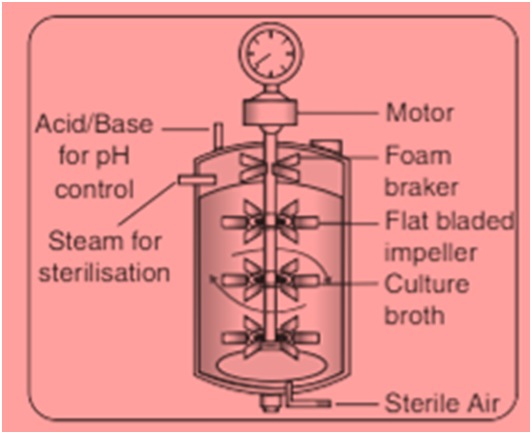
(1) Sparged stirred-tank bioreactor (2) Simple stirred-tank bioreactor(3) Thermo regulator (4) Power generator114. ……….cuts the DNA .(1) DNAase (2) RNAase(3) Knife (4) Restriction enzyme115. In this diagram, find out the undigested DNA, by restriction endonuclease?
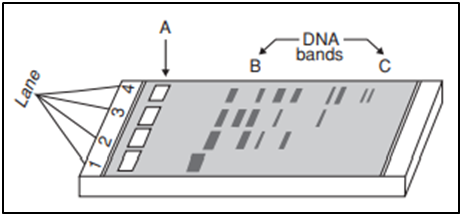
(1) Lane 1 (2) Lane 2(3) Lane 3 (4) Lane 4116. In organism Multiplication of alien DNA requires(1) ROP (2) ORI(3) Stop codon (4) TATA box117. ……… is the extraction of DNA from a gel piece .(1) Spooling (2) Elution(3) AGE (4) Annealing118. For…….. PCR technique is best.(1) DNA synthesis(2) DNA amplification(3) Protein synthesis (4) Amino acid synthesis119. Restriction endonuclease cuts(1) dsDNA (2) ssDNA(3) Single strand of dsDNA(4) Both (b) and (c)120. In animal cell ……… vector is use to deliver gene.(1) Retroviruses(2) Disarmed retroviruses(3) Ti-plasmid (4) E. coli121. Select the diagram which correctly represents the cutting of both strands of DNA by EcoRI?
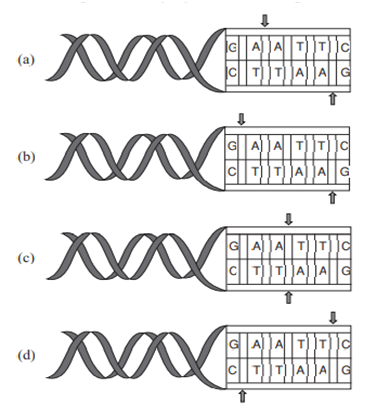
122. From………... the first restriction enzyme was isolated.(1) E. coli (2) Haemophilus influenzae(3) Pseudomonas (4) Xanthomonas123. For gene cloning Plasmids are suitable vector. Why?(1) They are smaller circular DNA(2) They are linear DNA(3) They can shuttle between prokaryotes and eukaryotes(4) None of the above124. The genetic material in majority of organisms is(1) DNA (2) RNA(3) mRNA (4) Protein125. In ‘EcoRI’ R represents………..(1) Genus (2) Species(3) Strain (4) Restriction enzyme126. Which is the best cloning organism for genetic engineering and biotechnology? (1) Agrobacterium (2) Pseudomonas(3) E. coli (4) Lambda phage127.In 30 cycles of PCR, amplified DNA is approximately …………… times.(1) 1 billion times (2) 1 million times(3) 100 times (4) 1000 times128. Engineered bacterium carries(1) Plasmids (2) rDNA(3) cDNA (4) ssDNA129. Genetic engineering is possiblbecause of the discovery of(1) Transduction (2) Transformation(3) Restriction enzyme and DNA ligase (4) Electron microscopy130. Which of the following is a correct matching?
131. By producing……….. bacteria protects themselves from viral attack.(1) Exonuclease (2) Endonuclease(3) DNA ligase (4) Gyrase132. The host cultured in a continuous culture system where inside the used medium is drained out from one side while fresh medium is added from the other to maintain cells in their physiologically _________ phase.(1) Lag (2) Log(3) Stationary (4) Declining133. By inserting desired genes in……………. transgenic plants are produced.(1) pBR322 (2) Ti plasmids(3) Lambda phage (4) none of these134. In……….. electrophoresis and Southern blotting techniques are used.(1) DNA fingerprinting (2) Gene synthesis(3) Gene cloning (4) All of these135. …………. is used to check the progression of restriction enzyme digestion?(1) PCR (2) ROP(3) AGE (4) All136. Select the true statement about EFB definition of biotechnology?(1) It includes traditional view.(2) It includes modern molecular biotechnology.(3) Definition is the integration of natural science and organisms, cells, parts thereof, and molecular analogues for products and services.(4) All the above137. ………….. is broken by Restriction enzyme.(1) Glycosidic linkage (2) H-bond(3) Sugar–phosphate linkage (4) All of these138. Transformants will grow on……. if alien DNA is introduced using SalI in pBR322. (1) Ampicillin (2) Tetracycline(3) Both (a) and (b) (4) None of these139. …………. is Restriction enzymne ‘A’ .(1) PstI (2) PVUII(3) BamHI (4) SalI140. Tumour producing plasmid transforms…………l(1) Animals (2) Plants (3) Bacteria (4) Fungi141. Specific………. Is recognized by Restriction enzymes.(1) Palindromic region(2) Exons(3) Introns (4) None of these142. The specific DNA sequence in which EcoRI cuts is(1) GATTCG (2) GAATTC (3) GTTCAA (4) TTCCAA143. Ti plasmid used in plant genetic engineering is a plasmid of(1) Azotobacter (2) Rhizobium (3) Agrobacterium (4) Saccharomyces144. rDNA is a(1) Chimeric DNA(2) Hybrid DNA-RNA(3) Recombinant of vector DNA and desired gene/s(4) Both (a) and (c)145. For……… Gel electrophoresis is used (1) Construction of rDNA(2) Isolation of DNA(3) Cutting of DNA(4) Separation of DNA fragments according to their size or length146. By staining DNA with…………. the fragmented DNA can be visualized.(1) NaCl(2) Ethidium bromide(3) Ethylene bromide(4) NaBr147. Restriction endonuclease enzymes possessing Bacteria remain(1) Affected by bacteriophages (2) Unattacked by bacteriophages(3) Resistant to drugs and heat(4) None of these148. We use……………….. to make bacterium competent (Transformation with recombinant DNA) (1) Specific concentration of Ca2+ ion (2) Heat shock (42°C)(3) Both (a) and (b) (4) None of these149. Hind II recognizes a specific sequence of how many base pairs?(1) 4 (2) 6(3) 8 (4) 10150. Restriction endonuclease is a……(1) Enzyme for transcription (2) Molecular blade(3) Enzyme for replication (4) Enzyme for transductionAssertion And Reason QuestionsThese questions consist of two statements each, printed as Assertion and Reason. While answering these Questions you are required to choose answer from one of the following four responses.(A) If both Assertion & Reason are True &the Reason is a correct explanation of the Assertion.(B) If both Assertion & Reason are true but Reason is not a correct explanation of the Assertion.(C) If Assertion is true but the Reason is False.(D) If both Assertion & Reason are false.151.Assertion: Biotechnology deals with techniques of using live organism or enzymes from organisms to produce products and processes useful of humans. Reason: In vitro fertilization is a part of biotechnology.(1) A (2) B (3) C (4) D152. Assertion: Ti Plasmid is used as cloning vector.Reason: It has ability to deliver gene of our interest to variety of plant and it is modified so now no more pathogenic to plant.(1) A (2) B (3) C (4) D153. Assertion: rDNA technology is superior over hybridization. Reason: rDNA technology allows us to isolate and introduce only one or a set of desirable gene without introducing undesirable genes into the target organism.(1) A (2) B (3) C (4) D154. Assertion: Selection of recombinants due to inactivation of antibiotics is complicated process.Reason: It requires simultaneous plating in two plates having different antibiotic.(1) A (2) B (3) C (4) D155. Assertion: Restriction endonuclease restricts the growth of bacteriophage in bacteria. Reason: Restriction endonuclease adds methyl groups to bacterial DNA.(1) A (2) B (3) C (4) D156. Assertion: In electrophoresis DNA is move towards anode.Reason: DNA is +vely charged molecule(1) A (2) B (3) C (4) D157. Assertion: In rDNA technology, the restriction enzymes, those produce sticky ends are commonly used. Reason: Sticky ends facilitates the action of enzyme DNA ligase.(1) A (2) B (3) C (4) D158. Assertion: r DNA formation is a part of genetic engineering.Reason: Genetic engineering include technique to alter chemistry of genetic material(1) A (2) B (3) C (4) D159. Assertion: Micro-injection technique is used to inject rDNA directly into the nucleus of an animal cell. Reason: Gene-gun is used to transfer rDNA into plant cells.(1) A (2) B (3) C (4) D160.Assertion: Cloning vector should have selectable marker. Reason: Selectable marker, helps in identifying and eliminating non-transformants and selectively permitting the growth of transformants.(1) A (2) B (3) C (4) D161. Assertion: In PCR T aq polymerase is used.Reason: Taq is thermo stable DNA polymerase(1) A (2) B (3) C (4) DAnswer Key
1
1
21
2
41
2
61
4
2
3
22
3
42
3
62
2
3
3
23
3
43
4
63
3
4
2
24
3
44
4
64
4
5
3
25
3
45
2
65
2
6
4
26
2
46
3
66
2
7
4
27
1
47
2
67
4
8
1
28
2
48
3
68
4
9
4
29
3
49
2
69
1
10
2
30
2
50
4
70
3
11
3
31
2
51
4
71
4
12
4
32
1
52
3
72
2
13
3
33
1
53
3
73
4
14
2
34
1
54
2
74
3
15
3
35
2
55
4
75
3
16
2
36
1
56
4
76
1
17
4
37
1
57
4
77
4
18
4
38
4
58
2
78
2
19
3
39
4
59
1
79
2
20
3
40
3
60
1
80
4
81
1
101
1
121
2
141
1
82
4
102
2
122
2
142
2
83
2
103
3
123
1
143
3
84
4
104
2
124
1
144
4
85
4
105
3
125
3
145
4
86
3
106
4
126
3
146
2
87
4
107
1
127
1
147
2
88
4
108
4
128
2
148
3
89
4
109
2
129
3
149
2
90
2
110
2
130
3
150
2
91
2
111
2
131
2
151
2
92
3
112
1
132
2
152
1
93
2
113
2
133
2
153
1
94
4
114
4
134
1
154
1
95
1
115
1
135
3
155
3
96
4
116
2
136
4
156
3
97
4
117
2
137
3
157
1
98
4
118
2
138
1
158
1
99
3
119
1
139
2
159
2
100
3
120
2
140
2
160
1
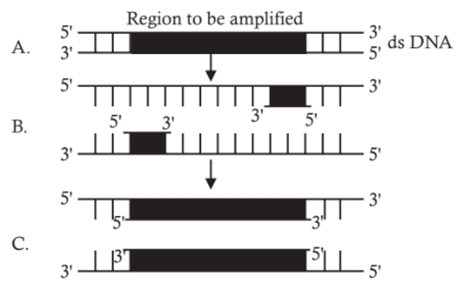
BIOTECHNOLOGY -PRINCIPLES AND PROCESSESPrevious year Questions1. The process of separation and purification of expressed protein before marketing is called[2017](a) Downstream processing (b) Bioprocessing(c) Postproduction processing(d) Upstream processing2.The DNA fragments separated on an agaros gel can be visualised after staining with : (2017)(a) Acetocarmine(b) Aniline blue(c) Ethidium bromide(d) Bromophenol blue3. A gene whose expression helps to identify transformed cell is known as: [2017](a) Vector(b) Plasmid(c) Structural gene(d) Selectable marker4. What is the criterion for DNA fragments movement on agarose gel during gel electrophoresis? [2017] (a) The smaller the fragment size, the fartherit moves(b) Positively charged fragments move to farther end(c) Negatively charged fragments do not move(d) The larger the fragment size, the farther it moves5. Which of the following is not a feature of the plasmids? [2016](a) Independent replication(b) Circular structure(c) Transferable(d) Single – stranded6. The taq polymerase enzyme is obtained from[2016](a) Thermus aquaticus (b) Thiobacillus ferroxidans(c) Bacillus subtilis(d) Pseudomonas putida7 Which of the following is a restriction endonuclease? [2016](a) Hind II (b) Protease(c) DNase I (d) RNase8. The cutting of DNA at specific locations became possible with the discovery of[2015 RS](a) Probes (b) Selectable markers(c) Ligases(d) Restriction enzymes9. The DNA molecule to which the gene of interest is integrated for cloning is called: [2015 RS](a) Vector (b) Template(c) Carrier (d) Transformer10. An analysis of chromosomal DNA using theSouthern hybridization technique does not use: [2014](a) Electrophoresis (b) Blotting(c) Autoradiography (d) PCR11.Which vector can clone only a small fragment of DNA(a) Bacterial artificial chromosome(b) Yeast artificial chromosome(c) Plasmid(d) Cosmid12. In vitro clonal propagation in plants is characterized by: [2014](a) PCR and RAPD(b) Northern blotting(c) Electrophoresis and HPLC(d) Microscopy13. Commonly used vectors for human genome sequencing are: [2014](a) T-DNA(b) BAC and YAC(c) Expression Vectors(d) kT/A Cloning Vectors14. DNA fragments generated by the restriction endonucleases in a chemical reaction can be separated by : [NEET 2013](a) Polymerase chain reaction(b) Electrophoresis(c) Restriction mapping(d) Centrifugation15. Genes of interest can be selected from a genomic library by using [NEET Kar. 2013](a) Restriction enzymes(b) Cloning vectors(c) DNA probes(d) Gene targets 16. The colonies of recombinant bacteria appear white in contrast to blue colonies of non- recombinant bacteria because of : [NEET 2013] (a) Insertional inactivate of Alpha galactosidase in non-recombinant bacteria (b) Insertional inactivation of alpha-galactosidase in recombinant bacteria (c) Inactivation of glycosidase enzyme in recombinant bacteria(d) Non-recombinant bacteria containing beta-galactosidase17. During the process of isolation of DNA, chilled ethanol is added to [NEET Kar. 2013](a) Remove proteins such as histones(b) Precipitate DNA(c) Break open the cell to release DNA(d) Facilitate action of restriction enzymes18. The figure below shows three steps (A, B, C) of Polymerase Chain Reaction (PCR).Select the option giving correct identificationtogether with what it represents? [2012M]
(a) B - Denaturation at a temperature of about 98°C separating the two DNA strands.(b) A - Denaturation at a temperature of about 50°C.(c) C - Extension in the presence of heat stable DNA polymerase. (d) A - Annealing with two sets of primers. 19. In genetic engineering, the antibiotics are used [2012M](a) as selectable markers.(b) to select healthy vectors.(c) to keep the cultures free of infection.(d) as sequences from where replication starts. 20. Biolistics (gene-gun) is suitable for [2012M](a) DNA finger printing.(b) Disarming pathogen vectors.(c) Transformation of plant cells.(d) Constructing recombinant DNA by joining with vectors.21. For transformation, micro-particles coated with DNA to be bombarded with gene gun are made up of : [2012](a) Silver or Platinum(b) Platinum or Zinc(c) Silicon or Platinum(d) Gold or Tungsten22. Which one is a true statement regarding DNA polymerase used in PCR [2012](a) It is used to ligate introduced DNA in recipient cell(b) It serves as a selectable marker(c) It is isolated from a virus(d) It remains active at high temperature23. PCR and Restriction Fragment Length Polymorphism are the methods for : [2012](a) Study of enzymes(b) Genetic transformation(c) DNA sequencing(d) Genetic Fingerprinting24. Which one of the following represents a palindromic sequence in DNA? [2012M](a) 5’ - GAATTC - 3’ 3’ - CTTAAG - 5’(b) 5’ - CCAATG - 3’ 3’ - GAATCC - 5’(c) 5’ - CATTAG - 3’ 3’ - GATAAC - 5’(d) 5’ - GATACC - 3’ 3’ - CCTAAG - 5’25. A single strand of nucleic acid tagged with aradioactive molecule is called : [2012](a) Vector (b) Selectablemarker(c) Plasmid (d) Probe26.The figure below is the diagrammatic representation of the E.Coli vector pBR 322.Which one of the given options correctly Identifies its certain component (s) ? [2012]
(a) ori - original restriction enzyme(b) rop-reduced osmotic pressure(c) Hind III, EcoRI - selectable markers(d) ampR, tetR - antibiotic resistance genes27. Which one of the following techniques made it possible to genetically engineer living organism ? [2011M](a) Recombinant DNA techniques(b) X-ray diffraction(c) Heavier isotope labelling(d) Hybridization28. There is a restriction endonuclease calledEcoRI. What does “co” part in it stand for ? [2011](a) colon (b) coelom (c) coenzyme(d) coli29. Agarose extracted from sea weeds finds usein : [2011](a) Spectrophotometry(b) Tissue culture(c) PCR(d) Gel electrophoresis30. Which one of the following palindromic base sequences in DNA can be easily cut at aboutthe middle by some particular restrictionenzyme? [2010](a) 5’.............CGTTCG.............3’ 3’.............ATGGTA.............5’(b) 5’.............GATATG.............3’ 3’.............CTACTA.............5’(c) 5’.............GAATTC.............3’ 3’.............CTTAAG.............5’(d) 5’.............CACGTA.............3’ 3’.............CTCAGT.............5’31. Stirred tank bioreactors have been designed for [2010](a) addition of preservatives to the product(b) purification of the product(c) ensuring anaerobic conditions in the culture vessel(d) availability of oxygen throughout the Process32. Polyethylene glycol method is used for [2009](a) biodiesel production(b) seedless fruit production(c) energy production from sewage(d) gene transfer without a vector33. Which one of the following is commonly used in transfer of foreign DNA into crop plants? [2009](a) Meloidogyne incognita(b) Agrobacterium tumefaciens(c) Penicillium expansum(d) Trichoderma harzianum34. Which one of the following is used as vector for cloning genes into higher organisms? [2010](a) Baculovirus (b) Salmonella typhimurium(c) Rhizopus nigricans(d) Retrovirus35. What is antisense technology? [2008](a) A cell displaying a foreign antigen used for synthesis of antigens(b) Production of somaclonal variants in tissue cultures(c) When a piece of RNA that is complementary in sequence is used to stop expression of a specific gene(d) RNA polymerase producing DNA36. Gel electrophoresis is used for [2008](a) cutting of DNA into fragments(b) separation of DNA fragments according to their size(c) construction of recombinant DNA by joining with cloning vectors(d) isolation of DNA molecule37. The linking of antibiotic resistance gene with the plasmid vector became possible with [2008](a) DNA ligase (b) Endonucleases(c) DNA polymerase(d) Exonucleases38. Chromosomes in a bacterial cell can be 1 to 3 in number and [2003](a) can be circular as well as linear within the same cell(b) are always circular(c) are always linear(d) can be either circular or linear, but never both within the same cell39. In bacteria, plasmid is [2002](a) extra – chromosomal material(b) main DNA(c) non-functional DNA(d) repetitive gene40. Introduction of food plants developed by genetic engineering is not desirable because[2002](a) economy of developing countries may suffer(b) these products are less tasty as compared to the already existing products(c) this method is costly(d) there is danger of entry of viruses and toxins with introduced crop41. What is true for plasmid ? [2001](a) Plasmids are widely used in gene transfer(b) These are found in virus(c) Plasmid contains gene for vital activities(d) These are main part of chromosome42. Two bacteria found to be very useful in genetic engineering experiments are [1998](a) Escherichia and Agrobacterium(b) Nitrobacter and Azotobacter(c) Rhizobium and Diplococcus(d) Nitrosomonas and Klebsiella43. The plasmids present in the bacterial cells are[1997](a) circular double helical DNA molecules(b) circular double helical RNA molecules(c) linear double helical DNA molecules(d) linear double helical RNA molecules.44. In bacterial chromosomes, the nucleic acid polymers are [1996](a) linear DNA molecule(b) circular DNA molecule(c) of two types-DNA and RNA(d) linear RNA molecule45. The plasmid [1995](a) helps in respiration(b) genes found inside nucleus(c) is a component of cell wall of bacteria(d) is the genetic part in addition to DNA inmicro-organisms46. Organelle/organoid involved in genetic engineering is [1994](a) plasmid (b) mitochondrion(c) golgi apparatus (d) lomasomeAnswer Key
1
a
11
c
21
d
31
d
41
a
2
c
12
a
22
d
32
d
42
a
3
d
13
b
23
d
33
b
43
a
4
a
14
b
24
a
34
d
44
b
5
d
15
c
25
d
35
c
45
d
6
a
16
d
26
d
36
b
46
a
7
a
17
b
27
a
37
a
8
d
18
c
28
d
38
b
9
a
19
a
29
d
39
a
10
d
20
d
30
c
40
d
Subscribe
Would you like to receive our Newsletter, NEET- IIT Videos, STEM Materials, NEET-IIT Solved previous year question papers.
Book Your Demo Class
Try for 1 Month @
Rs 2,000 only few seats available. Offer Ends Soon.
Book now and get your free unlimited TeenEinstein Portal Access.
You are now subscribed to our Newsletter etc.
Would you like to continue Free Trial.
TeenEinstein Stem Platform Portal access for 30 days Would you like to get the Portal access free trial for 30 days .
TakeBreak
You have watched Screen for 30 minutes, please relax your eyes by watching any other object at 20 feet for 20 secs.