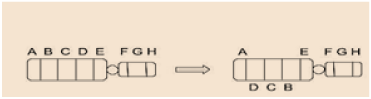
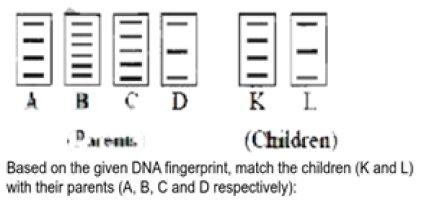
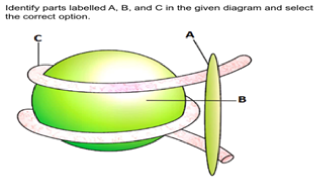
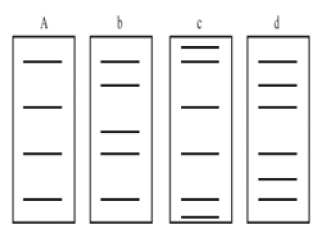
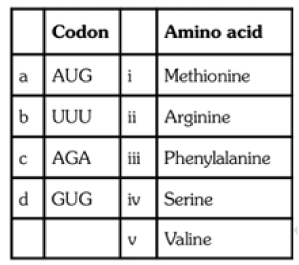
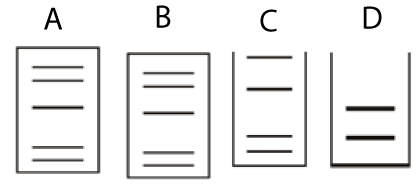
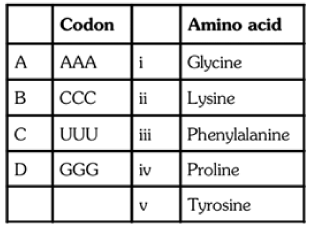
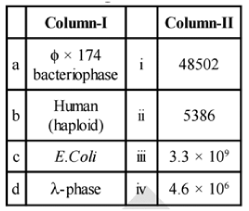
a1. Double stranded and Circular DNA occurs in -(1) Golgi body(2) Mitochondria(3) Nucleus (4) Cytoplasm2. The Double helix model of DNA proposed by Watson and crick was of-(1) C-DNA (2) B-DNA (3) D-DNA (4) Z-DNA3. Select the correct number of nucleotides, if there are 10,000 nitrogenous base pairs in a DNA (1) 500 (2) 10,000(3) 20,000 (4) 40,0004. DNA Double helix model was proposed by-(1). Watson and Crick (2) Schleiden Schwann (3) Singer and Nicholson (4) Kornberg and Khorana5. In structure of DNA molecule, back bone is made up of -(1) Pentose Sugar and phosphate(2) Hexose sugar and phosphate(3) Purine and pyrimidine(4) Sugar and phosphate6. In DNA and RNA common Substance is (1) Hexose Sugar (2) Histamine (3) Thymine (4) Phosphate groups7. What is Nucleotide (1) N2 - base, pentose sugar and phosphoric acid (2) Nitrogen, Hexose sugar and phosphoric acid (3) Nitrogen base, pentose sugar (4) Nitrogen base, trioses and phosphoric acid8. Unit of nucleic acids are-(1) Phosphoric acid(2) Nitrogenous bases (3) Pentose Sugar(4) Nucleotides9. Elementwhich is not found in nitrogenous base:-(1) Nitrogen (2) Hydrogen (3) Carbon (4) Phosphorus10. Who discovered DNA first?(1) Meischer (2) Robert Brown (3) Flemming (4) Watson & Crick11. In …………… Nucleic acid (DNA) is not found.(1) Nucleus &nucleolus (2) Peroxisome&ribosome (3) Mitochondria &plastid (4) Chloroplast & nucleosome12. DNA is not present in -(1) Mitochondria (2) Chloroplast(3) Bacteriophage (4) TMV13. A nucleic acid contains thymine or methylated uracil then it should be (1) DNA(2) RNA(3) Either DNA or RNA(4) RNA of bacteria14. Prokaryotic genetic system contains -(1) DNA & histones(2) RNA & histones(3) Either DNA or histones(4) DNA but no histones15. A N2- base together with pentose sugar and phosphate forms (or) building - block unit of nucleic acid is :-(1) Nucleoside (2) Polypeptide(3) Nucleotide (4) Amino acid16. ………..is not a pyrimidine N2 base -(1) Thymine (2) Cytosine(3) Guanine (4) Uracil17. In DNA, the purine & pyrimidine pairs of complementary strands are held together by – (1) H - bonds (2) O – bonds(3) C - bonds (4) N - bonds18. Hydrogen - bonds between guanine and cytosine are -(1) One (2) Two(3) Three (4) Four19. In DNA which purine & pyrimidine bases are paired together by Hydrogen bonds (1) AC & GT (2) GC &AT (3) GA & TC (4) None of the above20. In……………a single stranded DNA is present (1) TMV (2) Salmonella(3) f x174(4) Bacteria21. With the help of which loop, t - RNA attach to larger subunit of ribosomes(1) DHU - loop (2) Ty C loop (3) Anticodon loop (4) Minor loop22. In bacteria the codon AUG stands for -(1) Glycine (2) Methionine(3) N- formyl methionine (4) Alanine23. The three dimensional view the of t-RNA molecule is (1) L-shaped (2) S-shaped (3) Y- shaped (4) E-shaped24. The DNA site at which RNA polymerase binds during transcription is called:-(1) Promoter (2) Regulator(3) Receptor (4) Enhancer25. During transcription, if the nucleotide sequence of the DNA strand that is being coded is ATACG, then the nucleotide sequence in the mRNA would be(1) TATGC (2) TCTGG(3) UAUGC (4) UATGC26. RNA which has a structure resembling clover leaf?(1) rRNA (2) hnRNA(3) mRNA (4) tRNA27. ………………… makes use of RNA as a template to synthesize DNA –(1) DNA dependant RNA polymerase(2) DNA polymerase(3) Reverse transcriptase(4) RNA polymerase28. With the help of …………………cDNA probes are copied from the messenger RNA molecules (1) Restriction enzymes(2) Reverse transcriptase(3) DNA polymerase(4) Adenosine deaminase29. Which enzymeis responsible for transcription?(1) D.N.A polymerase-I(2) R.N.A. polymerase(3) Reverse transcriptase (4) D.NA. polymerase-III30. If the base sequence in DNA is 5′ AAAA 3′ then the bases sequence in m-RNA is:-(1) 5′ UUUU 3′ (2) 3′ UUUU 5′(3) 5′ AAAA 3′ (4) 3′ TTTT 5′31. Choose the correct order of molecular weight (1) DNA < r-RNA < t-RNA (2) DNA < m-RNA < r-RNA (3) t-RNA < m-RNA <DNA (4) t-RNA < DNA < m-RNA32. The genes are responsible for growth and differentiation in an organism through regulation of………..(1) Translocation (2) Transformation (3) Transduction and translation (4) Translation and transcription33. By which method, information reaches from DNA to RNA?(1) Transcription (2) Translation (3) Transformation (4) Transduction34. DNA acts as a template for synthesis of:-(1) RNA (2) DNA (3) Both ′1′ and ′2′ (4) Protein35. Among the following, whichis soluble RNA?(1) hnRNA (2) rRNA(3) mRNA (4) tRNA36. Portion of gene which is transcribed but not translated is:-(1) exon (2) intron (3) cistron (4) codon37. The smallest RNA is:-(1) r-RNA (2) m-RNA(3) t-RNA (4) nuclear RNA38. In a cell ……….is the most abundant RNA(1) r-RNA (2) t-RNA(3) m-RNA (4) None of these39. One strand of DNA (non template) has base sequence CAG, TCG, GAT. What will be the sequence of bases in m-RNA:-(1) AGC, CTA, CTA (2) GTC, AGC, CTC (3) CAG. UCG. GAU(4) GAC. TAG. CTA40. Who discovered Inverse transcription? (1) Watson and Crick(2) Khorana(3) Temin an Baltimore(4) Meischer41. The nature of the two strands of a DNA duplex is :-(1) Identical & Complimentary(2) Antiparallel & complimentary(3) Dissimilar & non complimentary(4) Antiparallel & non complimentary42. On an average, how many purine N2 bases are present in single coil of DNA (1) Four (2) Five(3) Ten (4) Uncertain43. Distance between two nucleotide pairs of DNA is (1) 0.34 nm (2) 34 A0(3) 3.4 m (4) 34 nm44. In a double strand DNA amount of Guanine is 35% then what will be the amount of cytosine?(1) 70% (2) 15%(3) 30% (4) 35%45. Chargaaf ′s rule is given as -(1) Purines = Pyrimidines(2) A + G = T+ C(3) A+ U = G + C(4) A + T / G + C = Const.46. Nucleotides are bonded by……… in RNA.(1) H – bonds (2) Phospo diester bonds (3) Ionic bonds (4) Salt linkage47. A nucleoside differs from a nucleotide is not having -(1) Phosphate (2) Sugar(3) Phosphate & sugar (4) Nitrogen base48. Diameter of the DNA helix showed by Wilkins X - ray diffraction is -(1) 10 Å (2) 20 Å(3) 30 Å (4) 40 Å49. In the DNA of an animal percentage of Adenine is 30 then percentage of Guanine will be -(1) 40 (2) 30 (3) 20 (4) 7050. DNA and RNA-Similarity is(1) Both are polymer of nucleotides(2) Both have similar pyrimidine(3) Both have similar sugar(4) Both are genetic material51. Length of one loop of B- DNA-(1) 3.4 nm. (2) 0.34 nm.(3) 20 nm. (4) 10 nm.52. If base order in one chain of DNA is "ATCGA" then how many no. of H–bond found in DNA duplex :–(1) 20 (2) 12(3) 10 (4) 1153. Purine nitrogen bases in DNA are:-(1) Uracil and Guanine(2) Guanine and Adenine(3) Adenine and cytosine(4) None54. Two free ribonucleotide units are interlinked with: (1) Peptide bond (2) Disulphide bond (3) Hydrogen bond (4) Phosphodiester bond55. The total number of nucleotides in short DNA segment which has 80 thymine and 90 guanine bases. (1) 160 (2) 40 (3) 80 (4) 34056. Prokaryotic DNA is :-(1) double stranded circular(2) single stranded circular(3) double stranded linear(4) double stranded RNA as nucleic acid57. Nucleoside is :-(1) Polymer of nucleic acid(2) Phosphoric acid + base(3) Phosphoric acid + sugar + base(4) Sugar + base58. Which of the following sugar is present in the back bone of (1) Deoxyribose (2) Ribose(3) Sucrose (4) Maltose59. Geneticmaterialof Retrovirus (1) DNA only (2) RNA only(3) DNA or RNA only (4) None60. In a nucleotide H3PO4 binds to which carbon atom of pentose sugar :-(1) Only Ist carbon(2) Only 3rd carbon(3) Only 5th carbon(4) Both 3rd and 5th carbon61. Mature eukaryotic m–RNA is recognised by(1) Shine dalgarno sequence at 5′ end(2) 7–methyl guanosine at 5′ end and polyadenine bases at 3′ end(3) Anti shine dalgarno sequence at 5′ end(4) Presence of coding and noncoding sequence62. In DNA transcription unit is –(1) Promoter (2) Structural gene(3) Terminator (4) All63. Promoter is the site for the initiation of………………. in DNA(1) Replication (2) Translation(3) Transcription (4) Both (2) & (3)64. Main enzyme of transcription–(1) DNA dependent DNA polymerase(2) DNA dependent RNA polymerase(3) RNA dependent RNA polymerase(4) RNA dependent DNA polymerase65. ………….. is Removal of introns and joining of exons (1) Capping (2) Tailing(3) Splicing (4) All66. In m-RNA a codon has:-(1) 3-bases (2) 2-bases (3) 1-base (4) Number of bases vary67. A DNA strand is directly involved in the synthesis of all the following except-(1) Another DNA (2) t-RNA & m-RNA(3) r-RNA (4) Protein68. Who discovered Genetic code?(1) Nirenberg & Mathei(2) Kornberg & Crick(3) Khorana & Kornberg(4) Gamow69. By chemically synthesizing the trinucleotides genetic code was deciphered by-(1) Watson & Crick(2) Beadle & Tatum(3) Briggs & King(4) M.W. Nirenberg70. Nirenberg synthesized an m-RNA containing 34 poly-Adenine (A-A-A-A-A-A-----) and found a polypeptide formed of 11 poly-lysine .This proved that genetic code for lysine was(1) one-adenine (2) A-A doublet(3) A-A-A triplet (4) Many adenines71. 64 Codons constitute genetic code because-(1) There was 64 types of amino acid(2) 64 types of t-RNA(3) Genetic code is triplet(4) There are 64 enzymes72. For the start of polypeptide (protein) chain synthesiswhich codon gives signal?(1) AUG (2) UGA(3) GUA (4) UAG73. What is the function of non-sense codons?(1) To release polypeptide chain from t-RNA (2) To form an unspecified amino acid (3) To terminate the message of a gene controlled protein synthesis-(4) To convert a sense DNA into non sense DNA74. In protein synthesis termination of chain growth is brought about by-(1) UUG, UGC, UCA (2) UCG, GCG, ACC (3) UAA, UAG, UGA (4) UUG, UAG, UCG75. Genetic code determines-(1) Structural pattern of an organism(2) Sequence of amino acid in protein chain(3) Variation in offsprings(4) constancy of morphological trait76. m - RNA is attached with -(1) E.R. (2) Ribosome(3) Nucleus (4) Lysosome77. Sometimes the starting codon is GUG in place of AUG, GUG normally stands for:-(1) Valine (2) Glycine (3) Methionine (4) Tyrosine78. Which one of the following triplet codes, is correctly matched with its specificity for an amino acid in protein synthesis or as ′start′ or ′stop′ codon:-(1) UCG – Start (2) UUU – Stop (3) UGU – Leusine (4) UAC – Tyrosine79. During translation initiation in prokaryotes, a GTP molecule is needed in:-(1) Formation of formyl-met-tRNA(2) Binding of 30S subunit of ribosome with mRNA(3) Association of 30 S-mRNA with formyl-met tRNA(4) Association of 50 S subunit of ribosome with initiation complex80. Degeneration of a genetic code is attributed to the :-(1) First member of a codon(2) Second member of a codon(3) Entire codon(4) Third member of a codon81. Acidic nature of DNA is due to:-(1) Sugar (2) Phosphoric acid (3) Purine (4) Pyrimidine82. T.M.V. contains:-(1) D N A(2) R.N.A. + Protein(3) D.N.A. + R.N.A.(4) D.N.A. + Protein83. In place of Thymine of DNA, ………. base is present in R N A(1) Thymine (2) Uracil(3) Adenine (4) None of these84. Genetic information are transferred from nucleus to cytoplasm of cell through:-(1) DNA (2) RNA (3) Lysosomes (4) ACTH85. If one strand of double stranded DNA, consists of the sequence 3′–ATTCGTAC–5′, then the complementary sequence must be –(1) 5′–UAAGCAUG–3′(2) 3′–TAAGCATG–5′(3) 5′–TAAGCATG–3′(4) 5′–TAAGCATG–3′ in the reverse direction86. Among the following statements which one is a false?(1) DNA is chemically less reactive, as compared to RNA(2) RNA mutate at a faster rate, as compared to DNA(3) Guanyl transferase enzyme helps in capping process during splicing of hn-RNA (4) r RNA is less abundantRNA in an animal cell87. The reason for uniform diameter in DNA molecule is?(1) Double stranded (2) Presence of phosphate (3) Specific base pairing between purine and pyrimidine (4) Specific base pairing between purine and purine88. Following structure is related to which compound?
(1) Adenine (2) Guanine(3) Uracil(4) Thymine89. If the sequence of bases in one strand of DNA is known then the sequence in other strand can be predicted on the basis of–(1) Antiparallel(2) Complementary(3) Polarity (4) Coiling90. The unequivocal proof that DNA is the genetic material came from the experiments of –(1) Hershey and chaese (1952)(2) Frederic Griffith (1928)(3) Watson and Crick(4) Meselson and Stal (1958) DNA REPLICATION91. In process of replication deoxyribonucleoside triphosphate(1) acting as substrate(2) providing energy for polymerisation reaction(3) acting as an enzyme(4) both (1) & (2)92. DNA duplication occurs at(1) Meiosis – II(2) Mitotic interphase(3) Mitosis only(4) Meiosis and mitosis both93. DNA Replication occurs at -(1) G0& G1(2) G2 – stage(3) S - Stage (4) Mitotic phase94. A DNA molecule in which both strands have radioactive thymidine is allowed to duplicate in an environment containing non- radioactive thymidine. What will be the exact number of DNA molecules that contains the radioactive thymidine after 3 duplications -(1) One (2) Two(3) Four (4) Eight95. A bacterium with completely radioactive DNA was allowed to replicate in a non- radioactive medium for two generation. What % of the bacteria should contain radioactive DNA:-(1) 100 % (2) 50 % (3) 25 % (4) 12.5 %96. what shall be the sequence of its complementary strand-if the base sequence of one strand of DNA is GAT , TAG ,CAT , GAC (1) CAT, CTG, ATC, GTA(2) GTA, ATC, CTG, GTA(3) ATC, GTA, CTG, GTA(4) CTA, ATC, GTA, CTG97. Method of DNA replication in which two strands of DNA separates and synthesizes new strands:-(1) Dispersive (2) Conservative (3) Semiconservative (4) Non conservative98. During replication of a bacterial chromosome DNA synthesis starts from a replication origin site and(1) RNA primers are not involved(2) is facilitated by telomerase(3) moves in one direction of the site(4) moves in bi-directional way99. In a polynucleotide chain, which one of the following hydrolyses internal phosphodiester bonds (1) Lipase (2) Protease (3) Exonuclease (4) Endonuclease100. DNA replication nature is:-(1) Conservation (2) Non conservative (3) Semi-conservative (4) Cyanobacteria101. What would happen if in a gene encoding a polypeptide of 50 amino acids, 25th codon (UAU) is mutated to UAA:-(1) A polypeptide of 24 amino acids will be formed (2) Two polypeptides of 24 and 25 amino acids will be formed (3) A polypeptide of 49 amino acids will be formed (4) A polypeptide of 25 amino acids will be formed102. A sequence of how many nucleotides in messenger RNA makes a codon for an amino acid?(1) Three (2) Four(3) One (4) Two103. A strand of DNA has following base sequence 3′– AAAAGTGACTAGTGA–5′. On transcription, it produces an m–RNA which of the following anticodon of t–RNA recognizes the third codon of this mRNA:–(1) AAA (2) CUG (3) GAC (4) CTG104. Protein synthesis occurs in an animal cell(1) On ribosomes present in cytoplasm as well as in mitochondria (2) On ribosomes present in the nucleolus as well as in cytoplasm(3) Only on ribosomes attached to the nuclear envelope and endoplasmic reticulum(4) Only on the ribosomes present in cytosol105. Select the true statement for protein synthesis (translation) :(1) Amino acids are directly recognized by m-RNA(2) The third base of the codon is less specific(3) Only one codon codes for an amino acid(4) Every t-RNA molecule has more than one amino acid attachment site106. The drug streptomycin inhibits the process of:-(1) Prokaryotic translation (2) Eukaryotic translation (3) Prokaryotic transcription (4) Eukaryotic transcription107.Translation is the process of(1) D.N.A. is formed on D.N.A template (2) R.N.A. is formed on D.N.A. template (3) D.N.A. is formed on R.N.A. template (4) Protein is formed from R.N.A. message108. If the 25th amino acid is mutated to UAA, in a polypeptide chain of 125 amino acids, then :-(1) A polypeptide of 124 amino acid is formed(2) A polypeptide of 25 amino acid is formed(3) A polypeptide of 24 amino acid is formed(4) Any of the above can be possible109. …….. was the first codon discovered by Nirenberg and Mathii.(1) CCC (2) GGG (3) UUU (4) AAA110. ……………… is not correct about translation:-(1) It starts with AUG (2) Stopped at termination codon (3) Based on operon model (4) Occurs in nucleus111. t-RNA attaches, amino acid at it’s:-(1) 3′ end (2) 5′ end (3) Anticodon (4) Loop112. Out of 64 codons only 61 codes for the 20 different amino acids. This character of genetic code is called (1) Degeneracy (2) Non ambiguous nature (3) Redundancy (4) Overlapping113. Anticodons are found in:-(1) m RNA (2) t RNA (3) r RNA (4) In all114. Who proposed one-gene-one enzyme hypothesis?(1) Beadle and Tatum (2) Jacob and Monod (3) Lederberg (4) Watson and Crick115. For incorporation of 25 amino acids in peptide chainhow many ATP and GTP molecules are required respectively?(1) 20 ATP, 20 GTP (2) 25 ATP, 25 GTP (3) 50 ATP, 50 GTP (4) 25 ATP 50 GTP116. Of the following RNA which one play structural and catalytic role during translation.(1) m-RNA (2) t-RNA(3) r-RNA (4) All117. …………… is the transfer of genetic information from a polymer of nucleotides to a polymer of amino acid.(1) Replication (2) Transcription (3) Translation (4) Reverse transcription118. The translation refers to–(1) Polymerisation of nitrogen bases (2) Polymerisation of nucleotides (3) Polymerisation of nucleosides (4) Polymerisation of amino acids119. Khorana & his colleagues synthesized an RNA molecule with repeating sequences of U G N2– bases. The RNA with "UGU GUG UGU GUG" produced a tetra peptide with alternating sequences of cystein and valine. This prove that codon for cystein & valine is(1) UGG, GUU (2) UUG, GGU(3) UGU & GUG (4) GUG & UGU120. Gene and cistron words are sometimes used synonymously because–(1) One cistron contains many genes(2) One gene contains many cistrons(3) One gene contains one cistron(4) One gene contains no cistron121. The direction of DNA replication is: (1) From 5′ end towards 3′ end(2) From 3′ end towards 5′ end(3) Amino terminus to carboxy terminus(4) Carboxy terminus to amino terminus122. Semi conservation replication of DNA was given by(1) Watson and Crick(2) Bateson and Punnett(3) Messelson and Stahl(4) Avery, McCarty and MacLeod123. In DNA multiplicationwhich enzyme is used?(1) RNA polymerase (2) DNA endonuclease (3) Exonuclease (4) DNA Polymerase124. Mode of DNA replication in E. coli is:-(1) Conservative and unidirectional (2) Semi conservative and unidirectional (3) conservative and bidirectional (4) Semi conservative and bidirectional125. Which enzyme is used to join DNA fragments:-(1) Terminase (2) Endonuclease (3) Ligase (4) DNA polymerase126. Okazaki fragments are synthesised on ………(1) Leading strands of DNA only(2) Lagging strands of DNA only(3) Both leading and lagging strands of DNA(4) Complementary DNA127. DNA replication includes:-(1) DNA ligase (2) DNA polymerase and ligase (3) RNA polymerase and ligase(4) All of these128. In DNA replication, the primer is:-(1) A small deoxyribonucleotide polymer (2) A small ribonucleotide polymer (3) Helix destabilizing protein (4) Enzyme taking part in joining nucleotides of new strand129. The strand of DNA, which does not code for anything is referred to as :-(1) Template strand(2) Antisense strand(3) Coding strand(4) Noncoding strand130. During DNA replication discontinuously synthesized fragments are later joined by the enzyme – (1) Ligase (2) DNA polymerase (3) RNA primer (4) Primase131. What is Replicationfork?(1) Large opening of the DNA helix(2) Small opening of the DNA helix(3) Tightly coiled part of DNA helix(4) Loosely coiled part of DNA helix132. The DNA dependent DNA polymerase catalyse polymerisation in–(1) 3′ 5′ direction(2) 5′ 3′ direction(3) Depend on the nature of template strand(4) both (1) & (2)133. Main enzyme of DNA replication is –(1) DNA dependent RNA polymerase(2) DNA dependent DNA polymerase(3) RNA dependent RNA polymerase(4) RNA dependent DNA polymerase134. The Process of copying genetic information from one strand of DNA into Y is termed as Z .Y Z
Y
X
(1) Transcription
RNA
(2) RNA
Transcription
(3) DNA
Translation
(4) Replication
RNA
135. Code in RNA corresponding to AGCT in DNA-(1) TACA (2) UCGA(3) TCGA (4) AGUC136. Which of the following is called adaptor molecule-(1) DNA (2) m-RNA(3) t-RNA (4) RNA137. Which may be attached with Adenine base in RNA -(1) Guanine (2) Cytosine(3) Uracil (4) Thymine138. In the base sequence of one starand of DNA is CAT, TAG , CAT , CAT, GAC what would be the base sequence of its complementary m-RNA-(1) GUA, GUA, CUG, AUC, CUG(2) AUG, CUG, CUC, GUA, CUG(3) GUA, AUC, GUA, GUA, CUG(4) GUC, CUG, CUG, CUA, CUU139. The process by which DNA of the nucleus passes genetic information to m-RNA is called-(1) Transcription (2) Translocation(3) Translation (4) Transportation140. A sequence of three consecutive bases in a t- RNA molecule which specifically binds to a complementary codon sequence in m RNA is known as -(1) Triplet(2) Non - sense codon(3) Anti codon(4) Termination codon141. A gene containing multiple exons and at least one intron is termed as:-(1) split gene(2) operator gene(3) synthetic gene(4) Epistatic gene142. Gene which is responsible for the synthesis of a polypeptide chain is called:-(1) Promoter gene (2) Structural gene(3) Regulator gene (4) Operator gene143. Which is true for tryptophan operon :-(1) It is the example of inducible operon(2) It is example of repressible operon(3) on ⟶ off(4) (2) and (3) both are correct144. Which is true for repressible operon:–(1) Off ⟶on (2) Inactive repressor + Co-repressor = active repressor (3) Active repressor + Inducer = inactive repressor (4) On ⟶off145. What does "lac" refer to, in what we call the lac operon:-(1) Lactose (2) Lactase (3) Lac insect (4) The enzyme146. Which of the following is not produced by E.Coli in the lactose operon -(1) b galactosidase(2) Thiogalactoside transacetylase(3) Lactose dehydrogenase(4) Lactose permease147. A functional complex comprising a cluster of genes including structural gene, a promoter gene, an operator gene and a regulator gene was discovered by :-(1) Beadle and Tatum (1958)(2) Watson and crick (1953)(3) Jacob and Monad (1961)(4) Britten and Davidson (1961)148. The operon model for the first time was explained (1) Francois Jacob (2) Jacques Monod (3) Francois Jacob and Jacques Monod (4) Beadle & Tatum149. The accessibility of promoter regions of prokaryotic DNA by RNA polymerase is in many cases regulated by the interaction of some protein with sequences termed as –(1) Promoter (2) Operator(3) Regulator (4) Cistron150. By repressor, regulation of lac operon is referred to as–(1) Positive regulation (2) Nagative regulation (3) Both (1) and (2)(4) None151. select the incorrect statement(1) i-gene codes for the repressor of lac operon(2) z-gene codes for the beta-galactosidase(3) y-gene codes for transacetylase(4) three gene products are required for metabolism of lactose152. The primary step for regulation of gene expression is …(1) Transport of m-RNA from nucleus to the cytoplasm(2) Translational level(3) Processing level(4) Transcriptional level153. Find out the correct sequence of structural gene in lac operon(1) y, a, z (2) a, z, y(3) z, y, a (4) z, a y154. The concept of sudden genetic change which breeds true in an organism is visualized as:-(1) Natural selection (2) Inheritance of acquired characters (3) Mutation (4) Independent assortment155. What is mutation?(1) An abrupt or discontinuous change which is inherited (2) A factor for plant growth (3) A change which affects parents only and is never inherited (4) A change which affects the offspring of F2 generation156. The change of chromosomal parts between non homologous pairs of chromosome:-(1) Crossing over/Transduction (2) Translocation (3) Inversion (4) Transition157. Which of the following can be called a mutation:-(1) The halfing of the chromosome number at meiosis (2) The doubling of the chromosome after syngamy(3) The possession of an additional chromosome(4) All the above158. Generallymutations are:-(1) Dominant (2) Recessive (3) Codominant (4) Incompletely dominant159. Genetic mutations occur in:-(1) DNA (2) RNA (3) Protein (4) RNA & protein both160. Which of the following undergoes change in mutation:-(1) Chromosome (2) Structure of gene (3) Sequence of gene (4) Any of the above161. The locus of mutation is:-(1) Gene (2) Chromosome (3) Centromere (4) Nucleus162. In the octaploid wheat, the haploid (n) and basic numbers (x) of chromosomes are:-(1) n=21, x=7 (2) n=28, x=7(3) n=7 x=28 (4) n=7, x=21163. Non-ionizing radiations commonly used for inducing mutations in organisms are:-(1) UV-rays (2) Beta-rays (3) X-rays (4) Gamma-rays164. The smallest unit of genetic material which upon mutation produce a phenotypic effect is:-(1) Mutons (2) Recon (3) Gene (4) Cistron165. The process which provides raw material for evolution is:-(1) Sexual reproduction (2) Meiosis (3) Mutation (4) Independent assortment166. Haploids are preferred over diploids for mutation studies because:-(1) Recessive mutation is expressed in F1(2) Recessive mutation is expressed in F2(3) Dominant phenotype is expressed(4) Dominant phenotype is suppressed167. Type of gene mutation which involves replacement of purine with pyrimidine or vice versa (OR) the substitution of one type of base with another type of base is:-(1) Transduction (2) Transversion (3) Translocation (4) Transcription168. The minimum requirement for mutation is:-(1) Change of triplet codon (2) Change in single nucleotide (3) Change in whole DNA(4) Change in single strand of DNA169. Mutations are:-(1) Always useful (2) Mostly useful(3) Never useful (4) Rarely useful170. Sickle cell anaemia is an example of (1) Frame shift mutation(2) Point mutation(3) Segmental mutation(4) Gibberish mutation171. The most striking example of frame shift mutation was found in a disease called:-(1) Sickle cell anaemia (2) Colour blindness (3) Laesh-Nyhn Syndrome (4) Thalassemia172. A nutritionally wild type organism, which does not require any additional growth supplement is known as:-(1) Holotype (2) Auxotroph (3) Prototroph (4) Phenotype173. Given below is the representation of a kind of chromosomal mutation: What is the kind of mutation represented
(1) deletion (2) duplication (3) inversion (4) reciprocal translocation174. The "cri-du-chat" syndrome is caused by change in chromosome structure involving:-(1) Deletion (2) Duplication (3) Inversion (4) Translocation175. A class of mutation induced by addition or deletion of a nucleotide is called:-(1) Missense (2) Non-sense (3) Substitution (4) frame shift176. Chromosomes with genes abcdefg becoming abedcfg is: (1) duplication (2) deletion (3) translocation (4) inversion177. Gene mutation is: (1) mutation in the genes of DNA (2) mutation in the phosphodiester linkage (3) mutation in the chromosomes (4) change in the sequence of nitrogenous bases178. Chromosome number 2n-1 is an example of(1) trisomy (2) euploidy(3) polyploidy (4) monosomy179. After a mutation at a genetic locus the character of an organism changes due to the change in(1) protein structure(2) DNA replication(3) protein synthesis pattern(4) RNA transcription pattern180. DNA finger printing was invented by:–(1) Kary Mullis (2) Alec Jeffery(3) Dr. Paul Berg (4) Francis Collins181. Which of the following is required as inducer(s) for the expression of Lac operon?(1) Glucose(2) Galactose(3) Lactose(4) Lactose and galactose182. A complex of ribosomes attached to a single strand of RNA is known as:-(1) Polysome (2) Polymer (3) Polypeptide (4) Okazaki fragment183. Which of the following is not required for any of the techniques of DNA fingerprinting available at present?(1) Polymerase chain reaction(2) Zinc finger analysis(3) Restriction enzymes(4) DNA–DNA hybridization184. Which one of the following is the starter codon?(1) AUG (2) UGA (3) UAA (4) UAG185. Taylor conducted the experiment to prove semiconservative mode of chromosome replication on: (1) Drosophila melanogaster (2) E. coli (3) Vinca rosea(4) Vicia faba186. The equivalent of a structural gene is: (1) Operon (2) Recon (3) Muton (4) Cistron187. Which of the following rRNA acts as structural RNA as well as ribozyme in bacteria?(1) 23 S rRNA (2) 5.8 S rRNA (3) 5 S rRNA (4) 18 S rRNA188. A non-Proteinaceous enzyme is:-(1) Ligase (2) Deoxyribonucleic (3) Lysozyme (4) Ribozyme189. A molecule that can act as a genetic material must fulfil the traits given below, except :-(1) It should be unstable structurally and chemically(2) It should provide the scope for slow changes that are required for evolution(3) It should be able to express itself in the form of ′Mendelian characters′(4) It should be able to generate its replica190. DNA-dependent RNA polymerase catalyses transcription on one strand of the DNA which is called the :-(1) Alpha strand (2) Antistrand(3) Template strand (4) Coding strand191. …………. is the mechanism that causes a gene to move from one linkage group to another . :(1) Translocation (2) Crossing-over(3) Inversion (4) Duplication192. Reverse transcriptase using RNA, forms which of the following?(1) Double stranded DNA(2) Double stranded RNA(3) DNA & RNA(4) Single stranded RNA193. An immature stop codon leads to:-(1) Mutation(2) Non-sense mutation(3) Variation(4) Intron194.
On the basis of given DNA fingerprint, match the childrens (K & L) with their respective parent (A, B, C and D):-(1) K-A, L-A (2) K-A, L-D (3) K-A, L-C (4) K-B, L-A195. Point mutation means?(1) Change in single base pair in DNA(2) Change in single base pair in RNA(3) Change in double base pair in DNA(4) Change in double base pair in RNA196. Genetic material is …….in most of the plant viruses.-(1) ssDNA (2) ssRNA(3) dsRNA (4) ssRNA + ssDNA197. Biological name of wheat is:-(1) Triticum aestivum (2) Triticum triticale(3) Triticum sativum (4) Triticum tuberosum198. DNA as the genetic material was finallyproved from the experiments of: (1) Hershey and Chase (2) Avery, Mcleod and McCarty (3) Hargobind Khorana (4) Griff199. DNA fragments are:(1) Negatively charged(2) Neutral(3) Either positively or negatively charge depending on their size(4) Positively charged200. If there are 999 bases in an RNA that codes for a protein with 333 amino acids, and the base at position 901 is deleted such that the length of the RNA becomes 998 bases, how many codons will be altered?(1) 11 (2) 33(3) 333 (4) 1201. Which one of the following pairs of terms/names mean one and the same thing(1) Gene pool – genome(2) Codon – gene(3) Cistron – triplet(4) DNA Fingerprinting - DNA profiling202. Which step does not involve in DNA finger printing(1) Southern blotting(2) Gel electrophoresis(3) Restriction enzyme digestion(4) Northern blotting203. ……… is the technique of transferring DNA fragment separated on Agarose gel to a synthetic membrane such as nitrocellulose (1) Northern blotting (2) Southern blotting(3) Western blotting (4) Dot blotting204. Western blotting is used for the identification of:-(1) DNA (2) RNA (3) Protein (4) All the above205. Techniques whichare used in analysing restriction fragment length polymorphism (RFLP) :-(a) Electrophoresis(b) Electroporation(c) Methylation(d) Restriction digestion(1) ′a′ and ′c′ (2) ′c′ and ′d′(3) ′a′ and ′d′ (4) ′b′ and ′d′206. The approximate number of genes contained in the humangenome (1) 40,000 (2) 30,000(3) 80,000 (4) 1,00,000207. The transfer of protein from electrophoretic gel to nitrocellulose membrane is known as:-(1) transferase (2) northern blotting(3) western blotting(4) southern blotting208. ………………. is not associated with HGP–(1) Bioinformatics(2) Cloning vectors BAC & YAC(3) Automated DNA sequencers(4) VNTR209. In density gradient centrifugation, the bulk DNA forms_____ while satellite DNA forms________.(1) Major peak; Minor peak(2) Minor peak; Major peak(3) Major peak; Major peak(4) Minor peak; Minor peak210. Which step is not correct in DNA finger printing–(1) Isolation of DNA(2) Digestion of DNA by DNA ligase enzyme(3) Separation of DNA by electrophoresis(4) Hybridisation using labelled VNTR probe211. DNA fingerprinting method is very useful for -(1) DNA tests for identity &relationships(2) Forensic studies(3) Polymorphism(4) All of the above212. Which antibiotic inhibits interaction between Trna and mRNA during bacterial protein synthesis?(1) Erythromycin (2) Neomycin(3) Streptomycin (4) Tetracycline213. Amino acid sequence, in protein synthesis is decided by the sequence of(1) tRNA (2) mRNA(3) cDNA (4) rRNA214. One gene-one enzyme hypothesis was postulated by (1) R. Franklin (2) Hershey and Chase (3) A.Garrod (4) Beadle and Tatum215. One turn of the helix in a B-form DNA is approximately(1) 20 nm (2) 0.34 nm(3) 3.4 nm (4) 2 nm216. Antiparallel strands of a DNA molecule means that(1) one strand turns anti-clockwise(2) the phosphate groups of two DNA strands, at their ends, share the same position(3) the phosphate groups at the start of two DNA strands are in opposite position (pole) (4) one strand turns clockwise217. Cri-du-chat syndrome in humans is caused by the(1) Fertilization of an XX egg by a normal Y-bearing sperm(2) Loss of half of the short arm of chromosome 5(3) Loss of half of the long arm of chromosome 5(4) Trisomy of 21stchromosome218. Triticale, the first man-made cereal crop, has been obtained by crossing wheat with –(1) Rye (2) Pearl millet(3) Sugarcane (4) Barley219. During protein synthesis in an organism, at one point the process comes to a halt. Select the group of the three codons from the following from which any one of the three could bring about this halt –(1) UUU, UCC, UAU (2) UUC, IIA, UAC(3) UAG, UGA, UAA (4) UUG, UCA, UCG220. Thymine is –(1) 5–Methyl uracil (2) 4–Methyl uracil(3) 3–Methyl uracil (4) 1–Methyl uracil221. During DNA replication, Okazaki fragments are used to elongate:(1) The lagging strand towards replication fork.(2) The leading strand away from replication fork.(3) The lagging strand away from the replication fork.(4) The leading strand towards replication fork.222. Which of the following RNAs should be most abundant in animal cell?(1) t-RNA (2) m-RNA(3) mi-RNA (4) r-RNA223. What is the criterion for DN A fragments movement on Agarose gel during gel electrophoresis ?(1) The smaller the fragment size, the farther it moves(2) Positively charged fragments move to farther end(3) Negatively charged fragments do not move(4) The larger the fragment size, the farther it moves224. DNA replication in bacteria occurs:(1) Within nucleolus(2) Prior to fission(3) Just before transcription(4) During S phase225. Spliceosomes are not found in cells of;(1) Fungi (2) Animals(3) Bacteria (4) Plants226. The association of histone H1 with a nucleosome indicates:(1) DNA replication is occurring.(2) The DNA is condensed into a Chromatin Fibre.(3) The DNA double helix is exposed.(4) Transcription is occurring.227. The process of formation of RNA from DNA is known as(1) Transcription(2) Translation(3) Replication(4) Transformation228. If base sequence in m-RNA is 5′ UAC GUA CGU ACG UAC GUA CGU ACG 3′ then what will be sequence of template strand?(1) 5′ CGT ACG TAC GTA CGT ACG TAC GTA 3′(2) 5′ TAC GTA CGT ACG TAC GTA CGT ACG 3′(3) 5′ ATG CAT GCA TGC ATG CAT GCA TGC 3′(4) 5′ GTA TAC ACG TGC GTA GTA CAG GCA 3′229.
Choose correct one :-(1) a-DNA, b-H1-histone, c-histone octamer, d-core of histone(2) a-core of histone, b-DNA, c-H1 histone, d-histone octamer(3) a-Histone octamer, b-core of histone, c-DNA, d-H1 histone(4) a-H1 histone, b-histone octamer, c-core of histone, d-DNA230. Below digram represent the DNA finger printing Which is true about diagram ?
(1) All are graphically similar(2) All are graphically dissimilar(3) Only A and C are similar(4) Only B and D are similar231. Match the column-I with column-II :-
Options :-(1) a-i, b-iii, c-ii, d-v (2) a-ii, b-iv, c-iii, d-i(3) a-iv, b-ii, c-iii, d-i (4) a-i, b-ii, c-iii, d-iv232. The following samples are collected from sugarcane field. Which of the following is true?
(1) All are dissimilar (2) All are similar (3) A and D are similar (4) A and B are similar233. As the codon, which is made by four N2 bases similary protein is made up by how many amino acids?(1) 20 (2) 10 (3) 11 (4) 25234. Match column-I to column-II :-
Options :-(1) A-ii, B-v, C-iii, D-iv(2) A-v, B-iii, C-i, D-iv(3) A-ii, B-iv, C-iii, D-i(4) A-iii, B-ii, C-v, D-i235. Formation of protein on RNA-strand is called:-(1) Transcription (2) Translation (3) Replication (4) Transformation236. The experimental proof for semiconservative replication of DNA was first shown in a(1) Fungus (2) Bacterium(3) Plant (4) Virus237. Select the correct Match: (1) Alec Jeffreys – Streptococcus pneumoniae (2) Alfred Hershey and – TMV Martha Chase (3) Matthew Meselson – Pisum sativum and F. Stahl(4) Francois Jacob and – Lac operon Jacques Monod238. Select the correct Match :(1) Ribozyme - Nucleic acid(2) F2 × Recessive parent - Dihybrid cross(3) T.H. Morgan – Transduction(4) G. Mendel - Transformation239. AGGTATCGCAT is a sequence from the coding strand of a gene. What will be the corresponding sequence of the transcribed mRNA?(1) AGGUAUCGCAU(2) UGGTUTCGCAT(3) ACCUAUGCGAU(4) UCCAUAGCGUA240. All of the following are part of an operon except:-(1) an operator (2) structural genes (3) an enhancer (4) a promoter241. In which one of the following combinations (1–4) of the number of the chromosomes is the present day hexaploid wheat correctly represented Combination (1) (2) (3) (4)Monosomic 21 7 21 41Haploid 28 28 7 21Nullisomic 42 40 42 40Trisomic 43 42 43 43242. Differentiation of organs and tissues in a developing organism is association with:-(1) Developmental mutations (2) Differential expression of genes (3) Lethal mutations (4) Deletion of genes243. Molecular basis of organ differentiation depends on the modulation in transcription by: (1) RNA polymerase (2) Ribosome (3) Transcription factor (4) Anticodon244. The Okazaki fragments in DNA chain growth :(1) Result in transcription(2) Polymerize in the 3′-to-5′ direction and forms replication fork(3) Prove semi-conservative nature of DNA replication(4) Polymerize in the 5′-to-3′ direction and explain 3′-to-5′ DNA replication245. The two polynucleotide chains in DNA are: (1) Parallel (2) Discontinuous (3) Antiparallel (4) Semiconservative246. In the hexaploid wheat, the haploid (n) and basic (x) numbers of chromosomes are:-(1) n=7 and x=21 (2) n=21 and x=21(3) n=21 and x=14 (4) n=21 and x=7247. Which of the following nitrogen base is not found in DNA-(1) Thymine (2) Cytosine(3) Guanine (4) Uracil248. Polysome is formed by :-(1) A ribosome with several subunits(2) Ribosomes attached to each other in a linear arrangement(3) Several ribosomes attached to a single mRNA(4) Many ribosomes attached to a strand of endoplasmic reticulum249. Which one of the following pairs of nitrogenous bases of nucleic acids, is wrongly matched with the category mentioned against it ?(1) Guanine, Adenine – Purines(2) Adenine, Thymine – Purines(3) Thymine, Uracil – Pyrimidines(4) Uracil, Cytosine – Pyrimidines240. In the DNA molecule:-(1) the proportion of Adenine in relation to thymine varies with the organism (2) there are two strands which run antiparallel one in 5′ 3′ direction and other in 3′ 5′(3) the total amount of purine nucleotides and pyrimidine nucleotides is not always equal(4) there are two strands which run parallel in the 5′ 3′ direction251. ……….. of codons is correctly matched with their function or the signal for the particular amino acid ?(1) AUG, ACG – Start/Methionine (2) UUA, UCA –Leucine (3) GUU, GCU –Alanine (4) UAG, UGA – Stop252. ………bond is not related to nucleic acid: (1) H-bond (2) Ester bond (3) Glycosidic bond (4) Peptide Bond253. Haploids are more suitable for mutation studies than the diploids. This is because :-(1) haploids are more abundant in nature than diploids(2) All mutations, whether dominant or recessive are expressed in haploids(3) Haploids are reproductively more stable than diploids(4) Mutagens penetrate in haploids more effectively than in diploids254. What is not true for genetic code :-(1) It is unambiguous(2) A codon in mRNA is read in a non-contiguous fashion(3) It is nearly universal(4) It is degenerate255. Removal of introns and joining the exons in a defined order in a transcription unit is called:-(1) Capping (2) Splicing (3) Tailing (4) Transformation256. Semiconservative replication of DNA was first demonstrated in:-(1) Salmonella typhimurium (2) Drosophila melanogaster (3) Escherichia coli (4) Streptococcus pneumoniae257. Whose experiments cracked the DNA and discovered unequivocally that a genetic code is a "triplet”:-(1) Beadle and Tatum (2) Nirenberg and Mathaei (3) Hershey and Chase (4) Morgan and Sturtevant258. Point mutation involves:-(1) Deletion (2) Insertion (3) Change in sing (4) Morgan and Sturtevant259. Select the two correct statements out of the four (a-d) given below about lac operon(a) Glucose or galactose may bind with the repressor and inactivated(b) In the absence of lactose the repressor binds witht the operator region(c) The z-gene codes for permease(d) This was elucidated by Francois Jacob and Jacque MonodThe correct statements are :(1) (b) and (d) (2) (a) and (b)(3) (b) and (c) (4) (a) and (c)260. Satellite DNA is useful tool in: (1) Forensic science (2) Genetic engineering (3) Organ transplantation (4) Sex determination261. ′Nuclein′ term was coined by:-(1) Meischer and Crick (2) Altman (3) Griffith (4) Meischer262. Codons of proline amino acid are :-(1) CCU CCC CCA(2) CAU CAC CAA(3) GGU GGC GGA(4) AAU AAA AAC263. Which of the following is incorrect?(1) RNA polymerase II --> Heterogeneous nuclear RNA(2) RNA polymerase III --> t-RNA, Sn-RNA, 5 S-rRNA(3) RNA polymerase I --> r-RNA(4) RNA polymerase I --> t-RNA, Sn-RNA, 5 S-rRNA264. Choose the correct option regarding above diagram:-
(1) i-inhibitor, z-b-galactosidase, y-permease, a-transacetylase(2) i-inducer, z-transacetylase, y-b-galactosidase, apermease(3) i-repressor, z-permease, y-transacetylase, a-b-galactosidase(4) i-inhibitor, z-transacetylase, y-permease, a-b-galactosidase265. t-RNA, m-RNA and r-RNA is used in synthesis of :-(1) Carbohydrate (2) Protein(3) Lipid (4) Steroid266. Which one is incorrect ?(1) DNA --> Ribose sugar(2) Splicing --> Removal of introns(3) Capping --> Adding of 7 mG at 5′end(4) RNA --> Uracil267. Match the following columns :-
(1) a-iv, b-iii, c-ii, d-i(2) a-iii, b-iv, c-i, d-ii(3) a-ii, b-iii, c-iv, d-i(4) a-i, b-ii, c-iii, d-iv268. Codon of Arginine amino acid are :-(1) CGU, CGC, CGA(2) UGU, UGC, UGA(3) AGU, AGC, AGA(4) AUA, AUC, AUG269. Select the correct statement regarding prokaryotes:-(1) DNA dependent RNA polymerase form all types of RNA.(2) Different RNA polymerase form different types of RNA.(3) Single DNA dependent DNA polymerase form one type of RNA.(4) Different DNA dependent DNA polymerase form one type of RNA.270. Which of the following is incorrect for satellite DNA?(1) High degree of polymorphism.(2) It is not inherited from parent to children.(3) It is used in DNA fingerprinting for genetic diversity.(4) Does not code for any protein.271. f-174 has which type of genome?(1) ss-RNA (2) ss-DNA(3) ds-DNA (4) ds-RNA272. All types of RNA are formed by transcription of :-(1) DNA (2) m-RNA(3) r-RNA (4) t-RNA273. Codon for alanine are :-(1) GCU GCC GCA (2) ACU ACC ACG(3) GAG GAC GAU (4) GUG GUC GUA274. The one aspect which is not a salient feature of genetic code, is its being :(1) Universal (2) Specific(3) Degenerate (4) Ambiguous275. Which one of the following does not follow the central dogma of molecular bilogy?(1) Chlamydomonas (2) HIV(3) Pea (4) Mucor276. PCR and Restriction Fragment Length Polymorphism are the methods for :-(1) DNA sequencing(2) Genetic fingerprinting(3) Study of enzymes(4) Genetic transformation277. What is it that forms the basis of DNA Fingerprinting?(1) The relative amount of DNA in the ridges and grooves of the fingerprints.(2) Satellite DNA occurring as highly repeated short DNA segments(3) The relative proportions of purines and pyrimidines in DNA(4) The relative difference in the DNA occurence in blood, skin and saliva278. Read the following four statements (A-D):(A) In transcription, adenosine pairs with uracil.(B) Regulation of lac operon by repressor is referredto as positive regulation.(C) The human genome has approximately 50,000 genes.(D) Haemophilia is a sex-linked recessive disease.How many of the above statements are right?(1) Four (2) One(3) Two (4) Three279. Which one of the following is a wrong statement regarding mutations?(1) UV and Gamma rays are mutagens(2) Change in a single base pair of DNA does not cause mutation(3) Deletion and insertion of base pairs cause frame shift mutations.(4) Cancer cells commonly show chromosomal aberrations.280. Which enzyme/s will be produced in a cell in which there is a nonsense mutation in the lac Y gene ?(1) Lactose permease and transacetylase(2) b-galactosidase(3) Lactose permease(4) Transacetylase281. DNA fragments generated by the restriction endonucleases in a chemical reaction can be separated by :(1) Restriction mapping(2) Centrifugation(3) Polymerase chain reaction(4) Electrophoresis282. Commonly used vectors for human genome sequencing are :-(1) T-DNA(2) BAC and YAC(3) Expression Vectors(4) T/A Cloning Vectors283. What is the correct sequence of DNA finger printing? a-seperation of desired DNA by gel electrophoresisb-Digestion by restriction endonucleasec- Isolation of DNAd- Hybridisation using labelled VNTR probee- Southern blotting(1) a --> b --> c --> d --> e(2) b --> d --> e --> a --> c(3) c --> b --> a --> d --> e(4) c --> b --> a --> e --> d284. In sea urchin DNA, which is double stranded, 17% of the bases were shown to be cytosine. The percentages of the other three bases expected to be present in this DNA are :-(1) G 17%, A 16.5%, T 32.5%(2) G 17%, A 33%, T 33%(3) G 8.5%, A 50%, T 24.5%(4) G 34%, A 24.5%, T 24.5%285. Gene regulation governing lactose operon of E.coli that involves the lac I gene product is :(1) Negative and inducible because repressor protein prevents transcription(2) Negative and repressible because repressor protein prevents transcription(3) Feedback inhibition because excess of b-galactosidase can switch off transcription(4) Positive and inducible because it can be induced by lactose286. The movement of a gene from one linkage group to another is called :-(1) Duplication (2) Translocation(3) Crossing over (4) Inversion287. Which of the following biomolecules does have a phosphodiester bond ?(1) Nucleic acids in a nucleotide(2) Fatty acids in a diglyceride(3) Monosaccharides in a polysaccharide(4) Amino acids in a polypeptide288. Which one of the following is not applicable to RNA?(1) Chargaff′s rule(2) Complementary base pairing(3) 5′ phosphoryl and 3′ hydroxyl ends(4) Heterocyclic nitrogenous bases289. Satellite DNA is important because it :(1) Codes for enzymes needed for DNA replication(2) Codes for proteins needed in cell cycle(3) Shows high degree of polymorphism in population and also the same degree of polymorphism in an individual, which is heritable from parents to children(4) Does not code for proteins and is same in all members of the population290. Identify the correct order of organisation of genetic material from largest to smallest :(1) Chromosome, genome, nucleotide, gene(2) Chromosome, gene, genome, nucleotide(3) Genome, chromosome, nucleotide, gene(4) Genome, chromosome, gene, nucleotidAnswer Key
1
2
41
2
81
2
121
1
161
1
201
4
241
2
281
2
2
2
42
3
82
2
122
1
162
2
202
4
242
3
282
4
3
3
43
1
83
2
123
4
163
1
203
2
243
4
283
2
4
1
44
4
84
2
124
4
164
1
204
3
244
3
284
1
5
1
45
2
85
3
125
3
165
3
205
3
245
4
285
2
6
4
46
2
86
4
126
2
166
1
206
2
246
4
286
1
7
1
47
1
87
3
127
4
167
2
207
3
247
3
287
1
8
4
48
2
88
3
128
2
168
2
208
4
248
2
288
3
9
4
49
3
89
2
129
3
169
4
209
1
249
2
289
4
10
1
50
2
90
1
130
1
170
2
210
2
250
4
290
1
11
2
51
1
91
4
131
2
171
4
211
2
251
4
12
4
52
2
92
4
132
2
172
3
212
2
252
2
13
1
53
2
93
3
133
2
173
3
213
4
253
2
14
4
54
4
94
2
134
2
174
1
214
3
254
2
15
3
55
4
95
2
135
2
175
4
215
3
255
3
16
3
56
1
96
4
136
3
176
4
216
2
256
2
17
1
57
4
97
3
137
3
177
4
217
1
257
3
18
3
58
2
98
4
138
3
178
4
218
3
258
1
19
2
59
2
99
4
139
1
179
1
219
1
259
1
20
3
60
3
100
3
140
3
180
2
220
4
260
4
21
2
61
2
101
1
141
1
181
1
221
4
261
1
22
3
62
4
102
1
142
2
182
2
222
1
262
4
23
1
63
3
103
3
143
4
183
1
223
2
263
1
24
1
64
2
104
1
144
2
184
4
224
3
264
2
25
3
65
3
105
2
145
1
185
4
225
2
265
1
26
4
66
1
106
1
146
3
186
1
226
1
266
3
27
3
67
4
107
4
147
3
187
4
227
1
267
1
28
2
68
1
108
3
148
3
188
1
228
1
268
1
29
2
69
4
109
3
149
2
189
3
229
2
269
2
30
3
70
3
110
4
150
2
190
1
230
1
270
2
31
3
71
3
111
1
151
3
191
1
231
4
271
1
32
4
72
1
112
1
152
4
192
2
232
1
272
1
33
1
73
3
113
2
153
3
193
2
233
3
273
2
34
3
74
3
114
1
154
3
194
1
234
4
274
2
35
4
75
2
115
4
155
1
195
2
235
2
275
2
36
2
76
2
116
3
156
2
196
1
236
4
276
2
37
3
77
1
117
3
157
3
197
1
237
1
277
3
38
1
78
4
118
4
158
2
198
1
238
4
278
2
39
3
79
3
119
3
159
4
199
2
239
3
279
2
40
3
80
4
120
3
160
4
200
3
240
2
280
4
Subscribe
Would you like to receive our Newsletter, NEET- IIT Videos, STEM Materials, NEET-IIT Solved previous year question papers.
Book Your Demo Class
Try for 1 Month @
Rs 2,000 only few seats available. Offer Ends Soon.
Book now and get your free unlimited TeenEinstein Portal Access.
You are now subscribed to our Newsletter etc.
Would you like to continue Free Trial.
TeenEinstein Stem Platform Portal access for 30 days Would you like to get the Portal access free trial for 30 days .
TakeBreak
You have watched Screen for 30 minutes, please relax your eyes by watching any other object at 20 feet for 20 secs.